


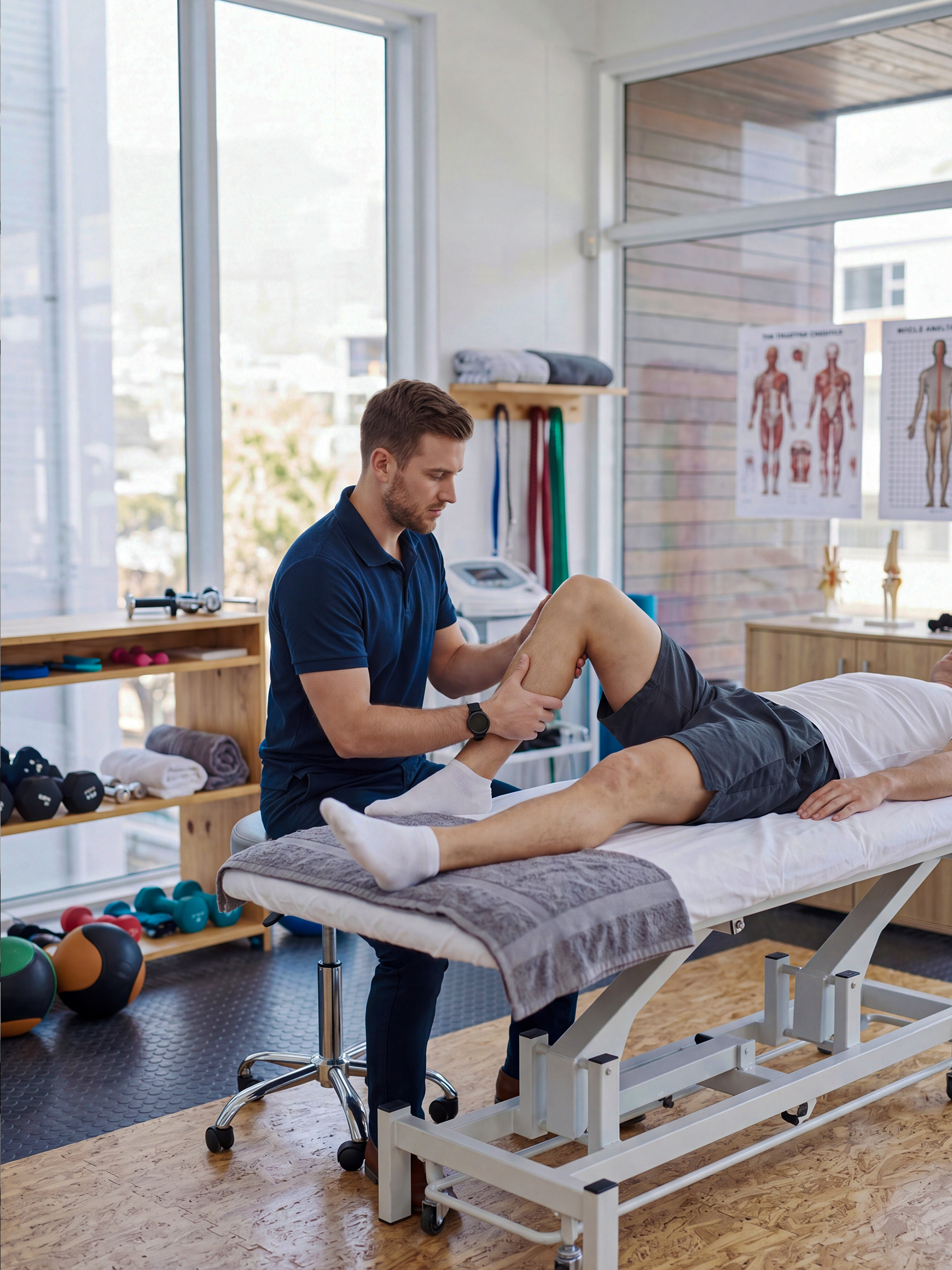


記事: Knee Stiffness During Daily Activity: Support Options to Consider

Knee Stiffness During Daily Activity: Support Options to Consider
Knee stiffness can make everyday movement feel less smooth long before it becomes severely limiting. The first few steps after sitting, getting up from a chair, bending the knee after a long period of inactivity, or moving through a normal workday may all feel different. But stiffness is a symptom, not a diagnosis, so the right support option depends on what is behind the stiffness and what you want the brace to help you do.
A knee brace may provide compression, a more secure feeling, or additional side structure during daily activity. It should not be treated as a cure for stiffness or as a substitute for evaluation when symptoms are new, worsening, or accompanied by swelling, locking, instability, or difficulty bearing weight.
This guide focuses on a practical buying question: how much support do you actually need when knee stiffness affects daily activity?
Quick Answer: Choose the Least Structure That Meets Your Need
Start with the amount of support you actually want rather than the most rigid brace available:
- Light compression: for users who mainly want a close, flexible fit with minimal bulk.
- Stabilized compression: for users who want compression plus features such as patella cushioning and flexible side stabilizers.
- Hinged or strap-adjustable support: for users who intentionally want more side structure and fit adjustment.
- Specialized unloader-style support: for selected people with a diagnosed knee condition such as certain presentations of knee osteoarthritis, ideally with professional fitting guidance.
The strongest brace is not automatically the most useful one. If extra bulk, tightness, or hardware makes bending harder, the brace may work against the reason you wanted support in the first place.
Knee Stiffness Is a Symptom, Not a Brace Category
People use the word stiff to describe different experiences. One person may need a few steps to loosen up after sitting. Another may have swelling that limits bending. Someone else may be guarding the knee because it feels unstable.
Those situations should not automatically lead to the same brace. Compression can change how supported the knee feels. Flexible side stabilizers can add reinforcement. Hinges can add more structure. None of those features can tell you why the knee is stiff.
Get professional advice before relying on a support product if stiffness is:
- new after a fall, twist, or other injury;
- accompanied by significant swelling, warmth, or redness;
- associated with locking or an inability to fully straighten the knee;
- paired with repeated giving-way;
- making it difficult to bear weight;
- progressively worsening without a clear explanation.
Match the Brace to the Movement That Feels Stiff
Daily activities do not place identical demands on the knee. In people with knee osteoarthritis, a 2025 systematic review and meta-analysis found meaningful differences in knee loading and symptoms across walking, stair climbing, and sit-to-stand tasks.1 That evidence is specific to knee OA, so it should not be used to explain every case of stiffness, but it illustrates a useful buying principle: judge support during the activity that actually bothers you.
| When Stiffness Is Most Noticeable | What to Prioritize | Common Fit Problem |
|---|---|---|
| After sitting | Easy flexion and extension | Bunching behind the knee |
| During walking | Secure positioning and low bulk | Sliding or rolling |
| During stairs or deeper bending | Patella positioning and comfortable flexion | Pinching as the knee bends |
| After long wear | Breathability and even pressure | Heat, edge pressure, excessive tightness |
If walking is the main issue rather than stiffness itself, use the dedicated guide Knee Brace for Walking: When Extra Support Makes Sense instead of treating this article as the complete walking guide.
Support Option 1: Lightweight Compression
A lightweight sleeve is the lowest-bulk option. It may suit someone who wants a snug, flexible feel without adding much structure around the joint.
This type of support is worth considering when:
- you want minimal bulk under clothing;
- you mainly want flexible compression;
- the knee feels stiff but not notably unstable;
- you want something easy to wear during routine daily movement.
The tradeoff is simple: a basic sleeve offers less side reinforcement and less fit adjustment than stabilized or hinged designs.
Support Option 2: Stabilized Compression
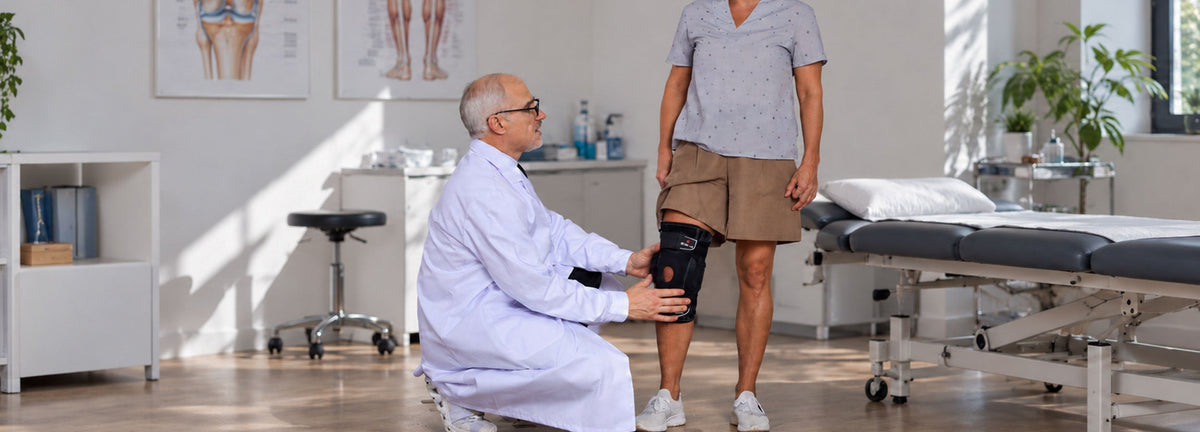
A stabilized compression brace keeps the sleeve-style format but adds features such as a contoured patella pad and flexible side stabilizers. This creates a more supported feel without moving all the way to rigid hinges.
For everyday activity, this category can be a useful middle ground when you want:
- compression with more structure than a basic sleeve;
- patella cushioning;
- flexible side reinforcement;
- less bulk than a hinged brace.
Within the NEENCA range, the ACE-50 is the lighter, softer, more breathable stabilized option. ACE-51 offers a thicker, more noticeable compression feel. These are different wearing preferences—not different “treatments” for stiffness.
Support Option 3: Hinged or Strap-Adjustable Support
A hinged brace adds more side structure and usually more fit adjustment. This may make sense when you intentionally want a firmer brace or when a pull-on sleeve does not provide the level of structure you prefer.
The NEENCA HX042/HX035 uses removable side hinges and front-crossing X-straps, making it more adjustable than a fixed pull-on sleeve.
The tradeoffs are additional bulk, more material around the knee, more strap pressure points to manage, and greater need for correct alignment. If your main issue is mild stiffness during otherwise normal daily activity, a hinged brace may be more support than you need.
When More Specialized Bracing Makes Sense
Unloader-style braces belong in a different category from ordinary compression sleeves and consumer hinged supports. They are designed to apply more specialized, directional support across the knee.
A 2024 review of knee orthoses emphasized that unloader, patellofemoral, and knee-sleeve braces differ in construction, biomechanics, intended use, and clinical evidence.5 A separate 2024 scoping review of knee OA bracing found 47 different bracing interventions across 31 randomized trials, underscoring how much brace design varies even within one diagnosis.2
The 2026 PROP OA randomized trial adds newer evidence. Researchers matched patellofemoral, tibiofemoral unloading, or neutral stabilizing braces to the participant’s predominant knee OA presentation. Adding matched bracing and adherence support to advice and exercise instruction produced small additional improvements in patient-reported outcomes.3
The practical takeaway is not that stiffness requires an unloader brace. It is that specialized bracing makes more sense when the underlying knee condition and the reason for using the brace are already understood.
What Current Guidance Says About Bracing
The 2026 VA/DoD guideline for hip and knee osteoarthritis suggests bracing for selected people with knee OA, with a weak-for recommendation.4 The guideline also highlights practical limitations that matter to real users, including slipping, heat retention, excessive pressure, swelling, and poor fit.4
That is useful beyond osteoarthritis because it reinforces a basic product-selection principle: a brace only works as a support option if it fits correctly and can be worn comfortably for the intended activity.
Fit Can Either Help or Make Stiffness Feel Worse
A brace that is too tight can make the knee feel more restricted. A brace that is too loose can slide, rotate, or bunch. Neither is useful.
A well-fitted daily support should generally:
- stay centered as you walk and bend;
- feel snug without sharp pressure;
- allow comfortable flexion and extension;
- avoid heavy bunching behind the knee;
- avoid numbness, tingling, unusual coldness, or skin-color changes.
Do not keep tightening a slipping brace indefinitely. Recheck the measurement instructions and whether the brace style suits your leg shape. For detailed sizing guidance, read How Tight Should a Knee Brace Be?.
A Brace Should Support Movement, Not Replace It
When stiffness is related to knee osteoarthritis, exercise remains an important part of contemporary management. A 2025 review in the Journal of Physiotherapy summarized recent evidence and uncertainties in knee OA exercise management and emphasized individualized exercise rather than a one-size-fits-all prescription.6
That does not mean pushing through sharp pain or ignoring a new injury. It means that a brace should support appropriate movement rather than become a substitute for movement.
Practical habits may include:
- breaking up long periods of sitting;
- using a gradual warm-up before longer activity;
- building strength and mobility within an appropriate program;
- adjusting activity when the knee is unusually irritated;
- using a brace when it adds useful support rather than wearing it automatically.
How to Compare NEENCA Support Options
There is no single NEENCA model that should be labeled “the knee stiffness brace.” The useful comparison is support level and wearing feel.
| NEENCA Option | Support Style | Consider It If... |
|---|---|---|
| ACE-50 | Lightweight stabilized compression | You prioritize lower bulk, breathability, and flexible daily support. |
| ACE-51 | Thicker stabilized compression | You prefer a firmer wrap feel with patella cushioning and flexible side stabilizers. |
| HX042/HX035 | Adjustable hinged support | You intentionally want more side structure and front-crossing X-strap adjustment. |
| OA 052 | Highly structured, side-specific support | You have a diagnosed knee condition and have been advised to consider more specialized structured support. |
OA 052 should not be treated as the automatic choice for stiffness simply because it is the most structured option. Its rigid frame, left/right-specific configuration, four straps, adjustable range of motion, and side-angle adjustment make correct setup more important than with a sleeve-style brace. Professional fitting guidance is recommended.
If you are comparing general support levels rather than following a medical brace prescription, use the NEENCA Knee Brace Finder to narrow your options.
When a Brace Is Probably Not the Main Answer
Do not let a support product delay evaluation when stiffness is accompanied by signs that suggest a more significant problem.
Seek professional advice if you have:
- significant or rapidly increasing swelling;
- a hot or red knee;
- locking or inability to fully straighten the knee;
- repeated giving-way;
- difficulty bearing weight;
- a recent injury;
- persistent stiffness that is worsening or substantially limiting normal activity.
Frequently Asked Questions
Can a knee brace make a stiff knee feel more restricted?
Yes. A brace that is too tight, too bulky, or poorly positioned can make bending feel more difficult. That is why fit and support level matter as much as the number of features on the brace.
Should I wear a knee brace all day if stiffness comes and goes?
Not automatically. If stiffness is mainly related to certain activities or periods of inactivity, you may not need the same level of support throughout the day. Follow the product instructions and any guidance from a healthcare professional.
Is a hinged brace better than a compression sleeve for stiffness?
Not necessarily. A hinged brace provides more side structure, while a compression or stabilized sleeve is usually less bulky and more flexible. Choose based on the amount of structure you actually want rather than assuming a hinge is always better.
Does a knee brace treat the cause of stiffness?
No. A brace can provide external support, compression, or a more secure feeling, but it does not diagnose or correct every cause of knee stiffness. Persistent or unexplained stiffness deserves proper evaluation.
Final Takeaway
Knee stiffness during daily activity does not automatically require a heavy brace. Start by identifying when the stiffness appears, what movements make it noticeable, and whether you want simple compression, flexible stabilization, or more structured support.
For many people who have already been cleared for normal activity, lightweight or stabilized compression is the simplest place to start. Hinged support adds more side structure when that is genuinely wanted. Unloader-style bracing is more specialized and makes the most sense when the underlying condition and fitting needs are already understood.
The best support option is the one that helps you move comfortably without creating unnecessary restriction—and that fits into a broader plan that still includes appropriate movement and professional guidance when needed.
Medical disclaimer: This article is for general educational purposes only and is not a substitute for medical advice, diagnosis, or treatment. Consult a qualified healthcare professional for new or worsening stiffness, significant swelling, locking, instability, a recent injury, difficulty bearing weight, or questions about using a highly structured brace for a diagnosed condition.
References
- Wan Y, McGuigan P, Bilzon J, Wade L. Knee loading and joint pain during daily activities in people with knee osteoarthritis: A systematic review and meta-analysis. Clinical Biomechanics. 2025;122:106433.
- Holden MA, Murphy M, Simkins J, et al. Knee braces for knee osteoarthritis: A scoping review and narrative synthesis of interventions in randomised controlled trials. Osteoarthritis and Cartilage. 2024;32(11):1371-1396.
- Holden MA, Nicholls E, Abdali Z, et al. Provision of knee bracing for knee osteoarthritis (PROP OA): multicentre, parallel group, superiority, statistician blinded, randomised controlled trial. BMJ. 2026;392:e086005.
- U.S. Department of Veterans Affairs and U.S. Department of Defense. The Non-Surgical Management of Hip & Knee Osteoarthritis: VA/DoD Clinical Practice Guideline. 2026.
- Dzidotor GK, Moorhead JB Jr, Ude CC, Ogueri KS, Ghosh D, Laurencin CT. Functions and Effectiveness of Unloader, Patellofemoral, and Knee Sleeve Orthoses: A Review. Regenerative Engineering and Translational Medicine. 2024;10(2):147-171.
- Haber T, Lawford BJ, Bennell K, Holden M, White DK, Hinman RS. Recent highlights and uncertainties in exercise management of knee osteoarthritis. Journal of Physiotherapy. 2025;71(3):158-166.


コメントを書く
このサイトはhCaptchaによって保護されており、hCaptchaプライバシーポリシーおよび利用規約が適用されます。