




Best Knee Support for Standing All Day: What to Look For
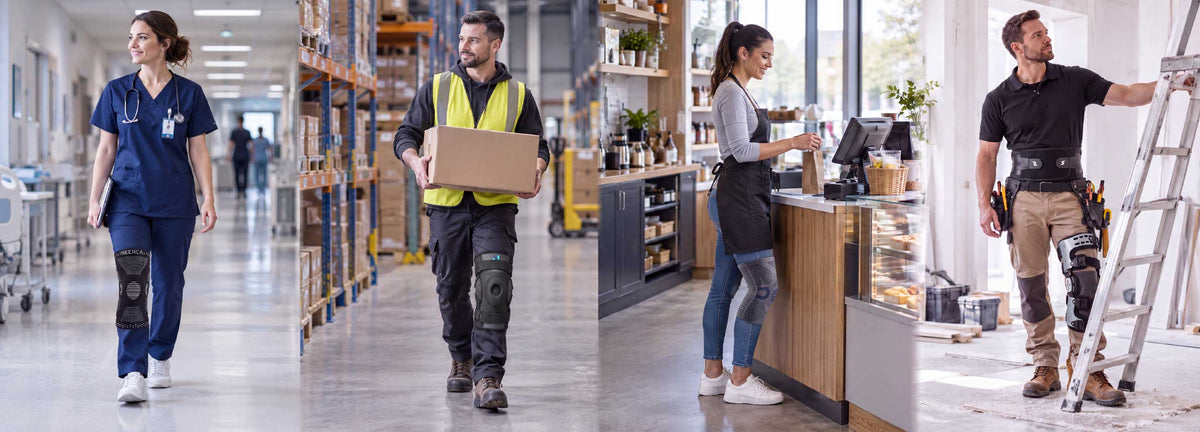
If you stand for long hours at work, your knees may not be the only part of your body that feels it. Long shifts can also affect your feet, ankles, hips, lower back, and overall energy. Nurses, warehouse workers, logistics teams, retail staff, teachers, food service workers, construction workers, factory employees, delivery drivers, and trade professionals all know how demanding a full day on your feet can be.
The right knee support cannot replace good footwear, work breaks, safer movement habits, or professional care when symptoms are serious. But a properly fitted knee brace or sleeve can provide compression, a more secure feel, and added support during long standing, walking, lifting, stairs, and repeated daily movement.
This guide explains what to look for in knee support for standing all day, how different workers may choose different support levels, and how to combine knee support with footwear, compression socks, back support, and workday habits for better comfort.
This article is for general educational purposes only and is not a substitute for professional medical advice, diagnosis, or treatment. If you have severe pain, persistent swelling, numbness, tingling, instability, a recent injury, circulation concerns, or difficulty bearing weight, consult a qualified healthcare professional before using a brace or compression product.
Why Standing All Day Can Stress Your Knees
Standing work may look simple from the outside, but the body is constantly making small adjustments to balance, support weight, and keep you upright. When standing is combined with walking, lifting, kneeling, climbing, reaching, pushing carts, carrying supplies, or working on hard floors, the knees can experience repeated stress throughout the day.
The Canadian Centre for Occupational Health and Safety notes that working in a standing position on a regular basis can be associated with sore feet, leg swelling, general muscular fatigue, low back discomfort, and stiffness in the neck and shoulders. That is why the solution should not be only “wear a brace.” A good workday support plan should include footwear, posture, task variation, breaks, floor conditions, and supportive gear when appropriate.
Common signs that your knees may need better workday support include:
- Knee fatigue near the end of a shift
- Stiffness after standing in one place
- Discomfort during stairs after work
- A heavy or tired feeling in the legs
- Feeling less confident during repeated bending or squatting
- Needing more recovery time after long shifts
If symptoms are severe, sudden, or worsening, do not rely on a brace alone. Get professional guidance.
Who Needs Knee Support for Long Standing?
Knee support for standing all day is not only for athletes. It can be useful for workers and active adults whose daily routines place repeated demand on the knees.
Nurses and Healthcare Workers
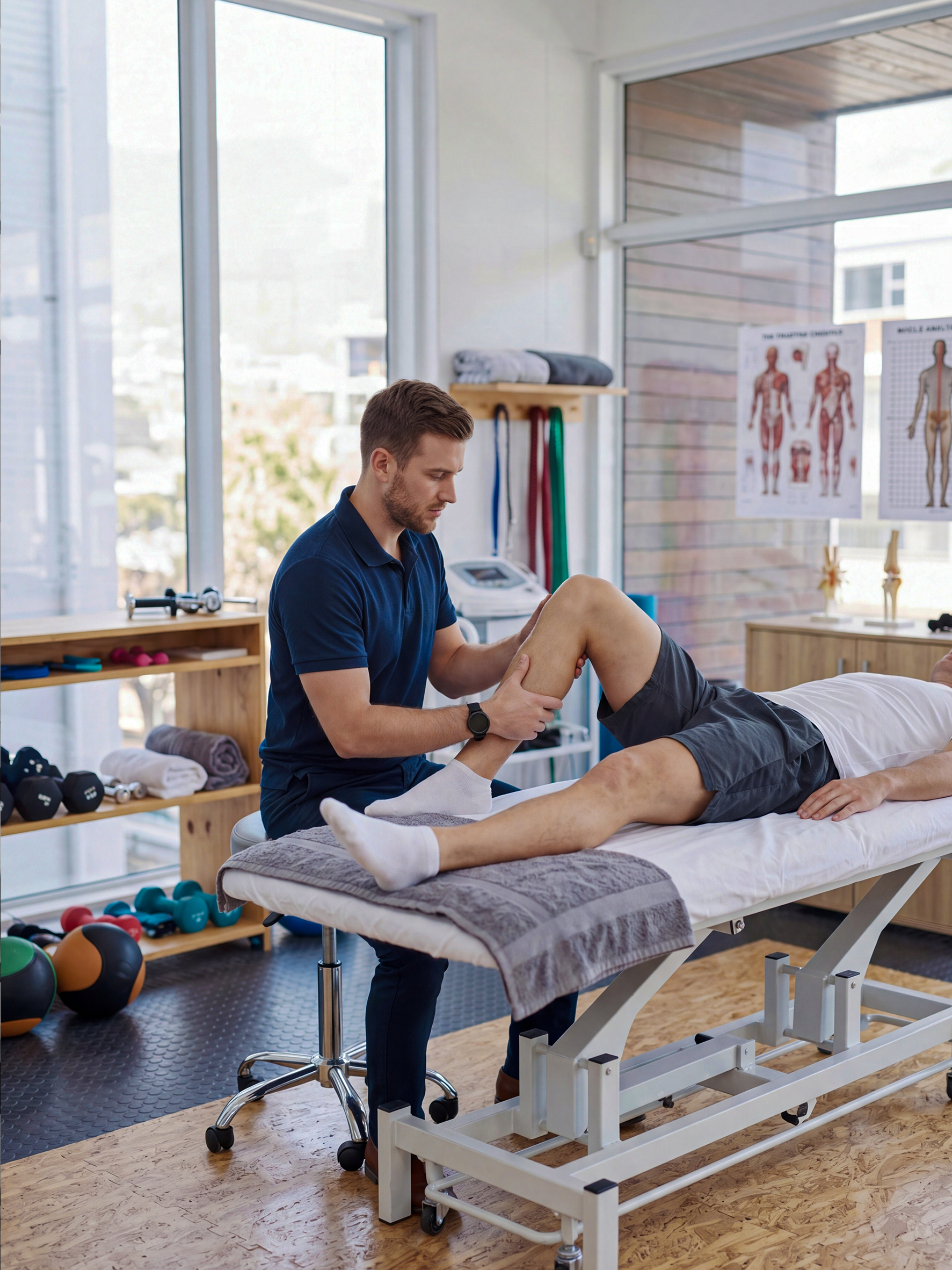
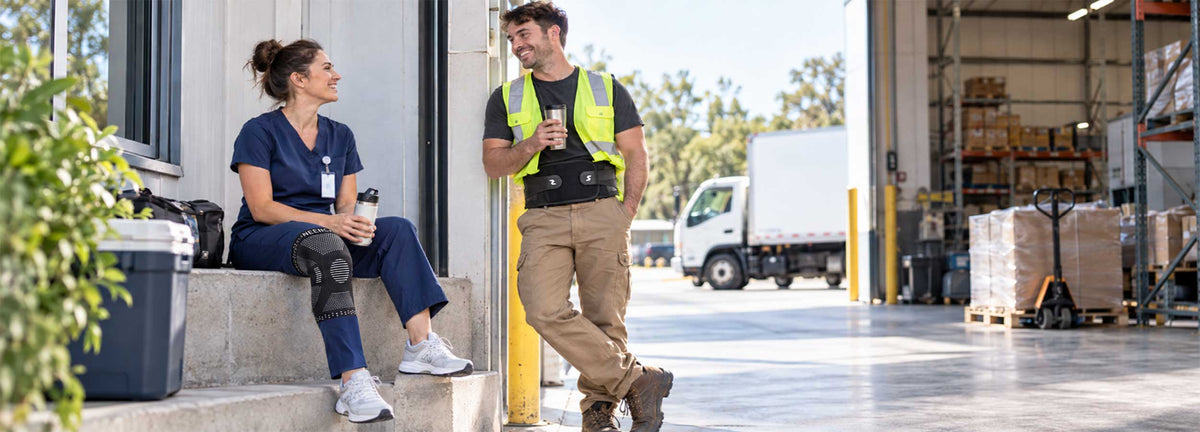
Nurses, caregivers, physical therapy aides, dental staff, and other healthcare workers often combine long standing with walking, lifting, bending, patient assistance, and quick movement between rooms. Supportive shoes, compression socks, and knee support may all play a role in workday comfort.
Warehouse and Logistics Workers
Warehouse workers and logistics teams often stand, walk, lift, carry, push, pull, climb, and move across concrete floors for hours. A knee support product should be secure enough for movement and breathable enough for long wear.
Retail and Food Service Workers
Retail staff, cashiers, restaurant workers, baristas, and kitchen workers may spend long hours standing on hard surfaces. Anti-fatigue mats, supportive footwear, and lower-leg support can be just as important as knee support.
Construction and Trade Workers
Construction workers, mechanics, electricians, plumbers, landscapers, and other trade professionals may kneel, squat, climb, carry equipment, or work on uneven surfaces. Some workers may need more structured support than a basic sleeve, depending on the task.
Teachers and Standing Desk Users
Teachers, trainers, presenters, and standing desk users may stand for long periods with limited movement variety. For this group, comfort, footwear, movement breaks, and posture changes are especially important.
What to Look For in Knee Support for Standing All Day
1. Comfortable Compression
Compression helps create a snug, supportive fit around the knee. For long shifts, the goal is not maximum tightness. The goal is consistent, comfortable support that you can tolerate for the hours you actually need it.
A good compression fit should feel secure without causing numbness, tingling, coldness, discoloration, or deep pressure marks. If a brace feels painfully tight, it is not the right fit.
2. Breathable Materials
If you work long shifts, breathability matters. A knee support product that feels hot, itchy, bulky, or uncomfortable may be worn once and then abandoned.
Look for breathable knit materials, moisture-managing fabric, soft edges, and a design that allows air movement. This is especially important for healthcare, warehouse, construction, food service, and summer work environments.
3. Secure Anti-Slip Fit
A knee brace that slides down every few minutes can be distracting and frustrating. For standing and walking work, the brace should stay positioned during movement.
Anti-slip design, proper sizing, elastic structure, and correct placement all matter. If a knee brace slips, the problem may be the wrong size, worn elastic, sweat, body shape, or a product type that does not match your work activity.
4. Enough Support Without Too Much Bulk
Workers often need support that can fit under uniforms, scrubs, work pants, or safety gear. A bulky brace may feel secure but may not be practical for all-day wear.
For long standing, many users choose a compression sleeve or a stabilized knee brace. A hinged brace may be considered when stronger structure is needed, but it may be too much for basic daily standing.
5. Patella and Side Support When Needed
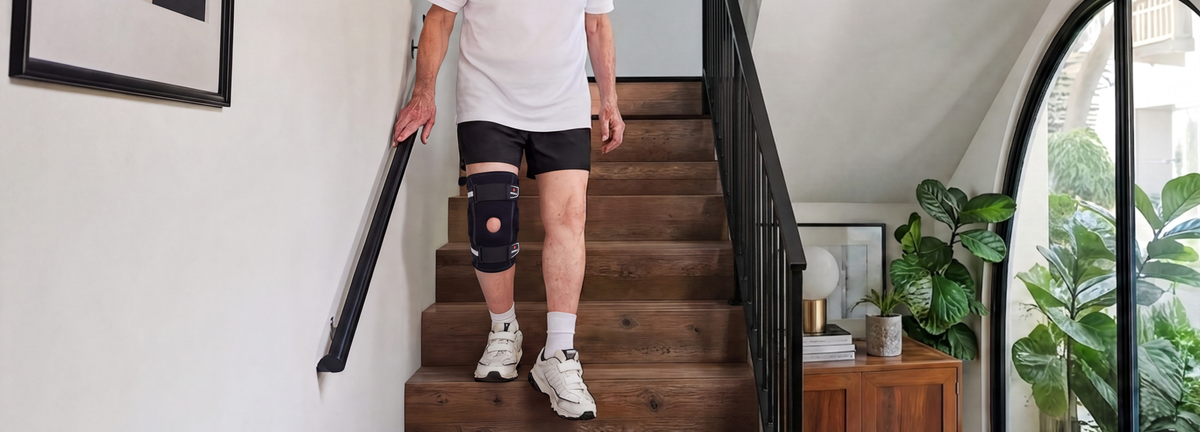
If you do more than stand — such as walking long distances, climbing stairs, bending, squatting, or carrying loads — a brace with patella support and side stabilizers may feel more secure than a simple sleeve.
Side stabilizers can provide added structure while still allowing natural movement. Patella support can help the brace sit more comfortably around the kneecap area.
6. Correct Sizing
Fit is one of the biggest factors in comfort and support. A brace that is too loose may slide. A brace that is too tight may restrict comfort and circulation.
Before choosing a product, use the NEENCA Find Your Size guide and measure carefully according to the product-specific instructions.
Knee Sleeve vs Stabilized Knee Brace vs OA Support for Standing All Day
For long standing, the best starting point is usually determined by how much support you need and how active your shift is.
| Option | Best For | What It Provides | What to Consider |
|---|---|---|---|
| Compression Knee Sleeve | Light daily support, walking, low-profile wear | Flexible compression, warmth, comfort, easy movement | Less side support than a stabilized brace |
| Stabilized Knee Brace | Long shifts, stairs, walking, bending, active work | Compression plus patella support, side stabilizers, and secure fit | More structure, may feel slightly bulkier than a sleeve |
| OA Unloader Knee Brace | Users who want highly structured, side-specific knee support for walking and daily movement | Rigid frame, adjustable straps, hinge adjustment, and more controlled support direction | More specialized fit; professional fitting guidance is recommended |
For a deeper general comparison, read Knee Sleeve vs Knee Brace: What’s the Difference? after it is published.
NEENCA Support Options to Compare
Different standing routines need different product directions. If you mainly want flexible compression under work pants, a sleeve-style product may be enough. If your job includes standing, walking, stairs, bending, and repeated movement, a stabilized brace may be more suitable. If you need more structured side-specific support, an OA-style brace may be a product direction to compare carefully.
For a broad workday support starting point, browse NEENCA Everyday Support.
For flexible compression and everyday knee support, compare the NEENCA ACE-50 Professional Knee Brace.
For a more supportive option with compression, patella support, side stabilizers, and breathable materials, compare the NEENCA ACE-51 Professional Knee Brace.
For highly structured, side-specific support during walking and daily movement, compare the NEENCA OA Unloader Knee Brace 052. Because this style affects how force and support feel around the knee, professional fitting guidance is recommended.
Support by Job Type
For Nurses and Healthcare Workers
Healthcare workers often need all-day comfort, breathability, and support that fits under scrubs. A low-profile knee sleeve or stabilized knee brace can be easier to wear during long shifts. Compression socks may also support lower-leg comfort when standing and walking for hours.
Look for:
- Breathable material
- Low-profile fit
- Secure compression
- Supportive footwear
- Compression socks for lower-leg comfort
- Movement breaks when possible
For Warehouse and Logistics Workers
Warehouse and logistics work often includes concrete floors, walking, lifting, carrying, pushing, pulling, and stairs. A stabilized knee brace may be more practical than a simple sleeve if you want a more secure feel during repeated movement.
Look for:
- Side stabilizers
- Anti-slip design
- Durable construction
- Breathability for long wear
- Supportive shoes with cushioning
- Proper lifting mechanics
For Retail and Food Service Workers
Retail and food service work often means standing in place, walking short distances repeatedly, and working on hard surfaces. Knee support can help, but the floor and footwear setup matter too.
Look for:
- Lightweight compression
- Comfortable fit under uniform pants
- Supportive shoes
- Anti-fatigue mats when available
- Short movement breaks
- Weight shifting instead of locking the knees
For Construction and Trade Workers
Construction, repair, landscaping, and trade work can involve kneeling, squatting, climbing, uneven ground, lifting, and carrying equipment. A worker in this category may need a more durable and supportive knee brace, depending on the task.
Look for:
- More structured support if bending or squatting often
- Secure fit that does not slip during movement
- Durable materials
- Compatibility with work pants and safety gear
- Proper knee pads if kneeling on hard surfaces
- Back support when lifting is part of the job
For lower-back support during standing, lifting, and work tasks, explore NEENCA Back Braces as part of a broader workday support setup.
Do Not Forget the Feet, Ankles, and Lower Back
Knee support is important, but long standing is a full-body issue. The feet, ankles, calves, hips, and lower back all affect how your knees feel by the end of a shift.
For long standing days, consider:
- Supportive shoes with proper fit
- Cushioned insoles when appropriate
- Anti-fatigue mats for stationary workstations
- Compression socks for lower-leg comfort
- Micro-breaks and position changes
- Core and hip strengthening outside work
- Back support for lifting or prolonged standing when appropriate
For lower-leg support during long standing, walking, travel, and work shifts, explore the NEENCA Compression Socks collection.
Workday Habits That Make Knee Support More Effective
A knee brace works best when it is part of a complete workday comfort strategy. The following habits can help reduce unnecessary strain.
Shift Weight Regularly
Avoid locking your knees or standing in one fixed posture for too long. Shift weight, step in place, or change foot position when possible.
Use Micro-Breaks
Even short breaks can help. A 30-second pause to walk, stretch, or change position may reduce stiffness during long shifts.
Wear Supportive Footwear
Shoes affect the knees. Worn-out or unsupportive footwear can change how force moves through the feet, ankles, knees, hips, and back.
Use Anti-Fatigue Mats When Available
Anti-fatigue mats can help in standing workstations, but they work best when combined with good footwear, posture changes, and work design. They should not be too soft or unstable.
Strengthen Hips, Legs, and Core
Strong hips, glutes, quadriceps, hamstrings, calves, and core muscles help support knee alignment and workday endurance.
Use Proper Lifting Mechanics
If your job includes lifting, keep objects close, bend at the hips and knees, avoid twisting under load, and use carts or lifting aids when possible.
How Tight Should Knee Support Be for Long Shifts?
A knee sleeve or brace should feel snug and supportive, but not restrictive. This is especially important for long shifts because small fit problems become more noticeable after several hours.
A good fit should:
- Stay in place during walking and standing
- Feel supportive without pinching
- Allow normal work movement
- Not cut into the skin
- Not cause numbness, tingling, coldness, or discoloration
Remove or adjust the brace if symptoms appear. If symptoms persist after removing it, seek medical advice.
When a Knee Brace Is Not Enough
A knee brace can support comfort and stability, but it cannot solve every work-related issue. If your work setup causes repeated strain, the job design may need attention too.
Consider speaking with a supervisor, safety professional, healthcare provider, or physical therapist if you experience:
- Persistent or worsening knee pain
- Swelling that does not improve
- Numbness or tingling
- A knee that gives way, locks, or catches
- Difficulty bearing weight
- Pain after a fall, twist, or work incident
- Back pain with leg symptoms
- Symptoms that interfere with work or sleep
OSHA and NIOSH both emphasize ergonomics and work design as important parts of reducing work-related musculoskeletal strain. Support products can help, but the broader work environment matters too.
Final Thoughts
The best knee support for standing all day is the one that matches your job, your movement pattern, and your comfort needs. A compression sleeve may work well for light support and low-profile wear. A stabilized knee brace may be better for long shifts that involve walking, stairs, bending, and repeated movement. An OA-style brace may be worth comparing for users who want highly structured, side-specific support and are willing to pay closer attention to fit and guidance.
For long workdays, also pay attention to footwear, anti-fatigue mats, movement breaks, posture, lifting habits, lower-leg support, and back support. Your knees do not work alone — your entire body contributes to how you feel after a shift.
To compare support options, start with the product direction that matches your real workday rather than choosing the strongest brace by default.
Frequently Asked Questions
What is the best knee support for standing all day?
The best knee support depends on your workday. For light support, a compression sleeve may be enough. For long shifts with walking, stairs, bending, or lifting, a stabilized knee brace may provide a more secure feel. Users who want highly structured, side-specific support may compare an OA-style brace and consider professional fitting guidance.
Should nurses wear knee braces during long shifts?
Some nurses may find knee braces or compression sleeves helpful for support during long shifts, especially when combined with supportive shoes, compression socks, movement breaks, and good body mechanics. A brace should fit properly and should not cause circulation symptoms.
Are knee sleeves good for standing all day?
Knee sleeves can be useful for light compression and daily comfort. They are usually lower profile and easier to wear under clothing, but they provide less structure than stabilized or OA-style knee braces.
Is a stabilized knee brace better than a sleeve for work?
It depends on your job. A stabilized brace may be better if your work involves stairs, lifting, walking, bending, or repeated movement. A sleeve may be enough if you mainly want flexible compression and light support.
What is an OA unloader knee brace?
An OA unloader knee brace is a more structured knee brace designed to provide side-specific support and adjust how support feels around the knee during walking or daily movement. Because fit and alignment matter, professional guidance is recommended.
Can a knee brace prevent work injuries?
A knee brace can provide support and comfort, but it cannot guarantee injury prevention. Proper footwear, lifting technique, work design, breaks, strength, recovery, and safety practices are also important.
How tight should a knee brace be for all-day standing?
It should feel snug and supportive, not painful or restrictive. Remove or adjust it if you notice numbness, tingling, coldness, discoloration, increased swelling, or deep pressure marks.
What else helps besides knee support?
Supportive footwear, anti-fatigue mats, compression socks, movement breaks, better posture, safer lifting, and hip/core strengthening can all help support workday comfort.
When should I see a doctor for knee discomfort from standing?
Seek professional advice if discomfort is severe, persistent, worsening, associated with swelling, numbness, instability, locking, or difficulty bearing weight, or if it follows a workplace incident.
References
- OSHA. Ergonomics.
- NIOSH / CDC. About Ergonomics and Work-Related Musculoskeletal Disorders.
- NIOSH / CDC. Elements of Ergonomics Programs.
- Canadian Centre for Occupational Health and Safety. Working in a Standing Position - Basic Information.
- Canadian Centre for Occupational Health and Safety. Back Belts.


Laisser un commentaire
Ce site est protégé par hCaptcha, et la Politique de confidentialité et les Conditions de service de hCaptcha s’appliquent.