




Knee Support for Wrestling: What Athletes Should Know
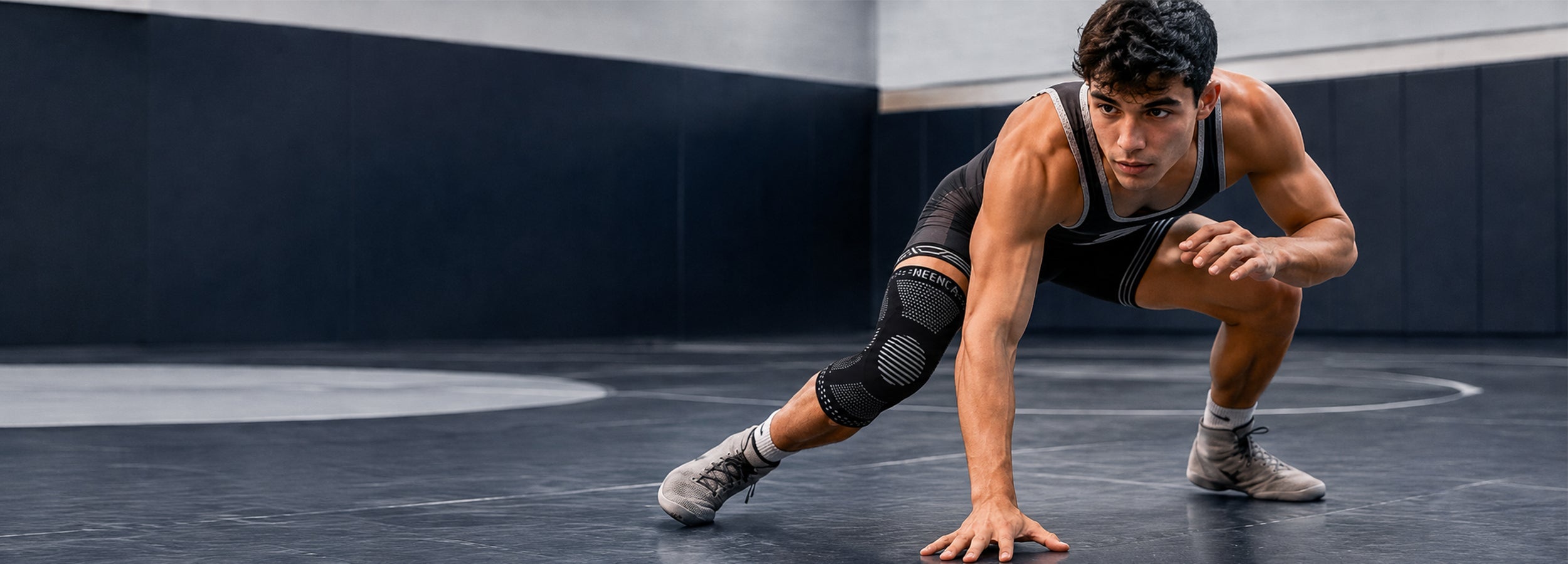
Wrestling is not like jogging, lifting, or casual court sports. It asks the knees to move through deep stances, quick level changes, shots, sprawls, pivots, scrambles, mat pressure, and sudden directional changes — often while another athlete is applying force in real time.
For wrestlers, knee support is not just about comfort. It has to work in a low stance, stay secure during scrambles, and make sense under the rules of the room, school, club, or tournament.
That is why knee support for wrestling needs to be chosen differently. A brace that feels fine for walking may slide during a scramble. A bulky brace that feels supportive in the gym may not be practical on the mat. A sleeve that works for practice may not meet every competition rule depending on the league, school, or event.
This guide explains what wrestlers, parents, and coaches should know before choosing knee support for wrestling. The goal is not to find the biggest or stiffest brace. The goal is to choose support that matches the athlete’s role, training load, comfort needs, mat movement, and competition requirements.
This article is for general educational purposes only and is not a substitute for professional medical advice, diagnosis, or treatment. If an athlete has sharp pain, swelling, instability, locking, numbness, a recent injury, or difficulty bearing weight, they should stop activity and speak with a qualified healthcare professional, athletic trainer, or sports medicine provider.
Why Wrestling Is So Demanding on the Knees
Wrestling puts the knee through repeated positions that are very different from everyday movement. A wrestler may move from a low stance into an explosive shot, drop a knee to the mat, sprawl backward, rotate through a scramble, and then drive through the legs again within a few seconds.
Several movement patterns make knee support a serious consideration for wrestlers:
- Low stance work: Wrestlers spend long periods with the knees bent and hips loaded.
- Shots and penetration steps: The lead knee may contact or come close to the mat repeatedly.
- Sprawls: Fast defensive movement can create sudden extension and impact.
- Pivots and direction changes: The knee may rotate while the foot is planted.
- Scrambles: The athlete may not fully control where force is coming from.
- Mat contact: Knees can absorb repeated pressure during drills, shots, and transitions.
Sports injury surveillance research has consistently shown that the knee is a meaningful injury location in wrestling, especially in competition settings. That does not mean every wrestler needs a brace. It does mean knee support should be selected thoughtfully rather than treated as a generic accessory.
What Knee Support Can and Cannot Do for Wrestlers
Knee support can help a wrestler feel more secure, comfortable, and aware of knee position during training. It can also provide compression and a more supported feel during stance work, drilling, and repeated mat contact.
However, a knee sleeve or brace cannot guarantee injury prevention. It cannot replace skill development, proper strength training, mat awareness, warm-ups, recovery, coaching, or medical evaluation when symptoms are present.
A better way to think about wrestling knee support is:
- It can support comfort during repeated movement.
- It can help the knee feel more secure during practice.
- It can provide compression and joint awareness.
- It can help protect the skin and knee area from some mat contact depending on design.
- It should not be used to hide pain or force an athlete to continue wrestling with symptoms.
If the main question is “Which support style fits my activity?” athletes can start with the NEENCA Knee Brace Finder before comparing individual products.
Training Support vs Competition Support
One of the most important distinctions in wrestling is the difference between training support and competition support.
For Practice
Practice often includes drilling, conditioning, stance motion, live wrestling, and repeated mat contact. Athletes may have more flexibility to choose support based on comfort and training needs, as long as the equipment is safe and approved by the coach or athletic trainer.
For practice, wrestlers may look for:
- Flexible compression
- A low-profile fit
- Secure anti-slip construction
- Breathable materials
- Comfort during kneeling, shots, and sprawls
- No hard or exposed parts that could affect another athlete
For Competition
Competition is different. Equipment rules may vary by organization, state association, league, school, age group, and event. Some braces, pads, sleeves, or support items may need approval. Hard or abrasive components may not be allowed unless properly covered. Uniform and equipment rules can also change over time.
NFHS wrestling rule updates for 2025–26 modified the restriction on leg sleeves, allowing leg sleeves without built-in pads in high school wrestling. Even with that update, athletes should still confirm current rules with their coach, official, athletic trainer, or governing body before match day.
College, club, youth, and tournament rules may differ, so athletes should not treat one rule set as universal.
The practical rule: do not assume that a brace approved for practice is automatically allowed in competition.
Knee Sleeve vs Stabilized Knee Brace for Wrestling
Most wrestlers should begin by understanding the difference between a compression sleeve and a stabilized knee brace.
| Support Type | Best For | Strengths | What to Watch |
|---|---|---|---|
| Compression Knee Sleeve | General training, stance work, light support, mat comfort | Flexible, low-profile, easy to move in, less bulky | May provide less side support than a stabilized brace |
| Stabilized Knee Brace | Training sessions where the athlete wants more support and a secure feel | More structure, possible patella support, side stabilizers, better security | May feel bulkier; competition approval should be checked |
| Hinged or Rigid Brace | Special cases, usually with professional guidance | Higher structural support | May not be practical or allowed for wrestling unless properly approved and covered |
For many athletes, a flexible sleeve or low-profile stabilized brace is more practical for wrestling than a bulky rigid brace. The best choice depends on the athlete’s movement style, training load, fit, comfort, and rules.
What Wrestlers Should Look for in Knee Support
1. A Low-Profile Fit
Wrestling involves close contact. A bulky brace can interfere with positioning, grips, and mat movement. A low-profile design is often more practical because it stays closer to the leg and feels less intrusive during stance, shots, and scrambles.
2. Secure Anti-Slip Construction
A knee support that slides down during running is annoying. A knee support that slides down during a scramble is a real problem.
Look for a design that stays in place during bending, kneeling, and repeated movement. Correct sizing is critical. A support that is too loose may twist or slide; one that is too tight may limit comfort and circulation.
3. Flexible Movement
Wrestlers need to bend, rotate, drive, sprawl, and recover position quickly. Knee support should not make the athlete feel locked into one movement pattern.
If a brace limits stance depth, changes the athlete’s shot mechanics, or feels awkward during mat movement, it may not be the right choice for wrestling.
4. Breathability
Wrestling rooms are warm. Practices are intense. A knee support product that traps too much heat can become uncomfortable quickly.
Breathable materials and moisture-management features matter because athletes may wear support through long drilling sessions, conditioning, and live rounds.
5. Smooth Surfaces and Rule Awareness
Wrestling equipment should not create unnecessary risk for the athlete or opponent. Avoid exposed hard parts, sharp edges, rough buckles, or anything that could catch during contact.
Before match day, athletes should check whether the support item is allowed under their competition rules.
When a Compression Sleeve Makes Sense
A compression sleeve may be the right starting point for wrestlers who want support without much bulk.
This can be useful for:
- Daily practice
- Warm-ups
- Stance drills
- Shot repetition
- Strength and conditioning sessions
- Athletes who prefer flexible movement
A sleeve should feel snug and secure, but it should not restrict circulation or force the athlete to move differently.
For athletes who want a lighter supportive compression option with kneecap cushioning and flexible side stabilizers, the NEENCA ACE-50 Professional Knee Brace is one product direction to compare.
When a Stabilized Knee Brace Makes Sense
A stabilized knee brace may be a better choice when a wrestler wants more support than a simple sleeve can provide.
This can be useful for:
- Longer or more demanding practices
- More secure support during repeated stance work
- Athletes who want patella-area support
- Training sessions that include lifting, conditioning, and mat work
- Wrestlers who prefer added side support during movement
The NEENCA ACE-51 Professional Knee Brace is designed with compression, patella support, side stabilizers, breathable materials, and anti-slip construction for active movement support.
For competition, athletes should confirm whether a stabilized brace is permitted, especially if it includes added support structures.
When a Rigid or Hinged Brace Requires Extra Caution
A rigid or hinged brace may provide more structure, but wrestling is a contact sport. Hard components, bulky hinges, or exposed parts may create rule or safety concerns. These braces are usually more appropriate when a healthcare professional recommends a specific support type and the athlete’s coach or governing body confirms that the equipment is allowed.
For many wrestlers, a hinged brace may be more realistic for certain training or return-to-activity situations than for live competition. Approval matters.
How to Choose Knee Support by Wrestling Situation
For Youth Wrestlers
Youth wrestlers should prioritize safety, fit, and coaching guidance. Parents should avoid choosing the most restrictive brace by default. The support should fit securely, allow natural movement, and be approved by the coach or event rules.
For High School Wrestlers
High school wrestlers often face a heavy practice schedule, weight-management pressure, competition stress, and rapid changes in strength and body size. Fit should be checked throughout the season, especially if the athlete’s body composition changes.
For Club and Tournament Wrestlers
Club wrestlers may compete under different rule sets across events. A sleeve or brace that is accepted at one tournament may not be accepted at another. Athletes should check rules before traveling.
For Athletes Returning After Time Away
A knee support product can help some athletes feel more confident, but it should not replace a gradual return plan. Practice intensity, drilling volume, strength, mobility, and recovery should all be progressed carefully.
Fit: The Part Most Wrestlers Get Wrong
Fit is one of the biggest reasons knee support fails during wrestling. A product can have good materials and still perform poorly if it is the wrong size.
A good wrestling knee support should:
- Stay centered during stance and movement
- Feel snug without causing numbness or tingling
- Allow deep knee bending
- Not bunch behind the knee
- Not slide down during shots or sprawls
- Not create rough contact points for the opponent
Before choosing a product, use the NEENCA Find Your Size guide and follow the product-specific size chart. Do not choose size based only on height, weight, or age.
Practice-Test Before Match Day
Never test a new knee support product for the first time during competition. Wrestling support should be tested through real wrestling movement before match day.
A practical test should include:
- Warm-up movement
- Stance motion
- Penetration steps
- Sprawls
- Kneeling and mat contact
- Short live rounds
- Checking for slipping or bunching afterward
If the support shifts, catches, pinches, or changes the athlete’s technique, it should be adjusted or replaced before competition.
Do Not Use Knee Support to Wrestle Through Symptoms
Wrestling culture often rewards toughness, but ignoring symptoms can lead to poor decisions. A brace should support movement, not hide a problem.
Athletes should stop and seek guidance if they notice:
- Sharp knee pain
- Sudden swelling
- A knee that gives way
- Locking or catching
- Numbness or tingling
- Pain after a twist, fall, or direct impact
- Difficulty bearing weight
- Symptoms that worsen during practice
Youth wrestling research has also discussed delayed presentation of injuries, meaning some athletes do not seek care right away. Parents and coaches should take recurring symptoms seriously, especially when an athlete changes movement patterns or avoids certain positions.
Recovery Habits Matter as Much as Support
Knee support is only one part of wrestling readiness. Athletes also need recovery routines that match the intensity of the sport.
After hard practices or tournaments, wrestlers should pay attention to:
- Sleep quality
- Hydration
- Protein and overall nutrition
- Gradual training progression
- Mobility work
- Strength around the hips, thighs, and calves
- Communication with coaches and athletic trainers
For more post-practice guidance, read the Wrestling Knee Recovery Guide.
How to Choose the Right NEENCA Knee Support for Wrestling
For wrestling, start with the question: Do I need flexible compression, more secure support, or professional-guided stability?
| Need | Support Direction | Why It May Fit Wrestling |
|---|---|---|
| Light support and flexibility | Compression sleeve | Low-profile, flexible, easier to move in during drills and conditioning |
| More secure feel during practice | Stabilized knee brace | Can offer compression, patella support, and side stabilizers for active movement |
| Higher stability needs | Professional-guided support | May require medical, coaching, or rule approval before wrestling use |
Athletes can browse the NEENCA Knee Braces Collection to compare different support levels for training and daily movement. For competition use, always confirm current rules before wearing any sleeve, pad, or brace on the mat.
Final Thoughts
Knee support for wrestling should be chosen with the sport in mind. Wrestlers need support that can handle low stance work, shots, sprawls, scrambles, mat contact, and repeated changes of direction without limiting movement or creating rule issues.
For many athletes, a low-profile compression sleeve or stabilized knee brace is the most practical place to start. A more rigid or hinged brace may require professional guidance and rule approval. The right choice depends on the athlete’s support needs, fit, comfort, training demands, and competition setting.
Most importantly, knee support should never be used to ignore symptoms. If something feels sharp, swollen, unstable, or not normal, stop and get qualified guidance.
Frequently Asked Questions
Can wrestlers wear knee sleeves during competition?
Rules can vary by organization, state, school, club, and event. NFHS updates for 2025–26 modified restrictions on leg sleeves, but athletes should always confirm current rules with their coach, official, athletic trainer, or governing body before match day.
Is a knee sleeve or stabilized knee brace better for wrestling?
A sleeve is usually more flexible and low-profile. A stabilized brace may provide a more secure feel during practice but can be bulkier and may need rule approval for competition. The best choice depends on the athlete’s movement, fit, support needs, and event rules.
Should youth wrestlers wear knee support?
Some youth wrestlers may use knee support for comfort during training, but fit, movement, and coach approval matter. Parents should avoid overly restrictive products unless a healthcare professional recommends them.
Can a knee brace prevent wrestling injuries?
No knee brace can guarantee injury prevention. Proper coaching, conditioning, technique, recovery, mat awareness, and early attention to symptoms are also important.
When should a wrestler stop practice and get the knee checked?
A wrestler should stop and seek guidance if they experience sharp pain, swelling, locking, instability, numbness, tingling, difficulty bearing weight, or symptoms after a twist, fall, or direct impact.
References
- Kroshus E, Chrisman SPD, Rivara FP, et al. The First Decade of Web-Based Sports Injury Surveillance: Descriptive Epidemiology of Injuries in US High School Boys' Wrestling and NCAA Men's Wrestling. Journal of Athletic Training. 2018.
https://pmc.ncbi.nlm.nih.gov/articles/PMC6365066/ - Chandran A, Morris SN, Wasserman EB, et al. Epidemiology of Injuries in National Collegiate Athletic Association Men's Wrestling: 2014–2015 Through 2018–2019. Journal of Athletic Training. 2021.
https://pmc.ncbi.nlm.nih.gov/articles/PMC8293878/ - Reddy RP, et al. Decreasing Incidence of Youth Wrestling Injuries: A 10-Year Analysis of National Injury Data. Orthopaedic Journal of Sports Medicine. 2024.
https://pmc.ncbi.nlm.nih.gov/articles/PMC11618925/ - Mehta A, et al. Epidemiology of Wrestling Injuries in Female Athletes at US Emergency Departments. Cureus. 2025.
https://pmc.ncbi.nlm.nih.gov/articles/pmid/39835085/ - National Federation of State High School Associations. Wrestling Rules Changes - 2025-26. NFHS. 2025.
https://www.nfhs.org/resources/sports/wrestling-rules-changes-2025-26




Hinterlasse einen Kommentar
Diese Website ist durch hCaptcha geschützt und es gelten die allgemeinen Geschäftsbedingungen und Datenschutzbestimmungen von hCaptcha.