


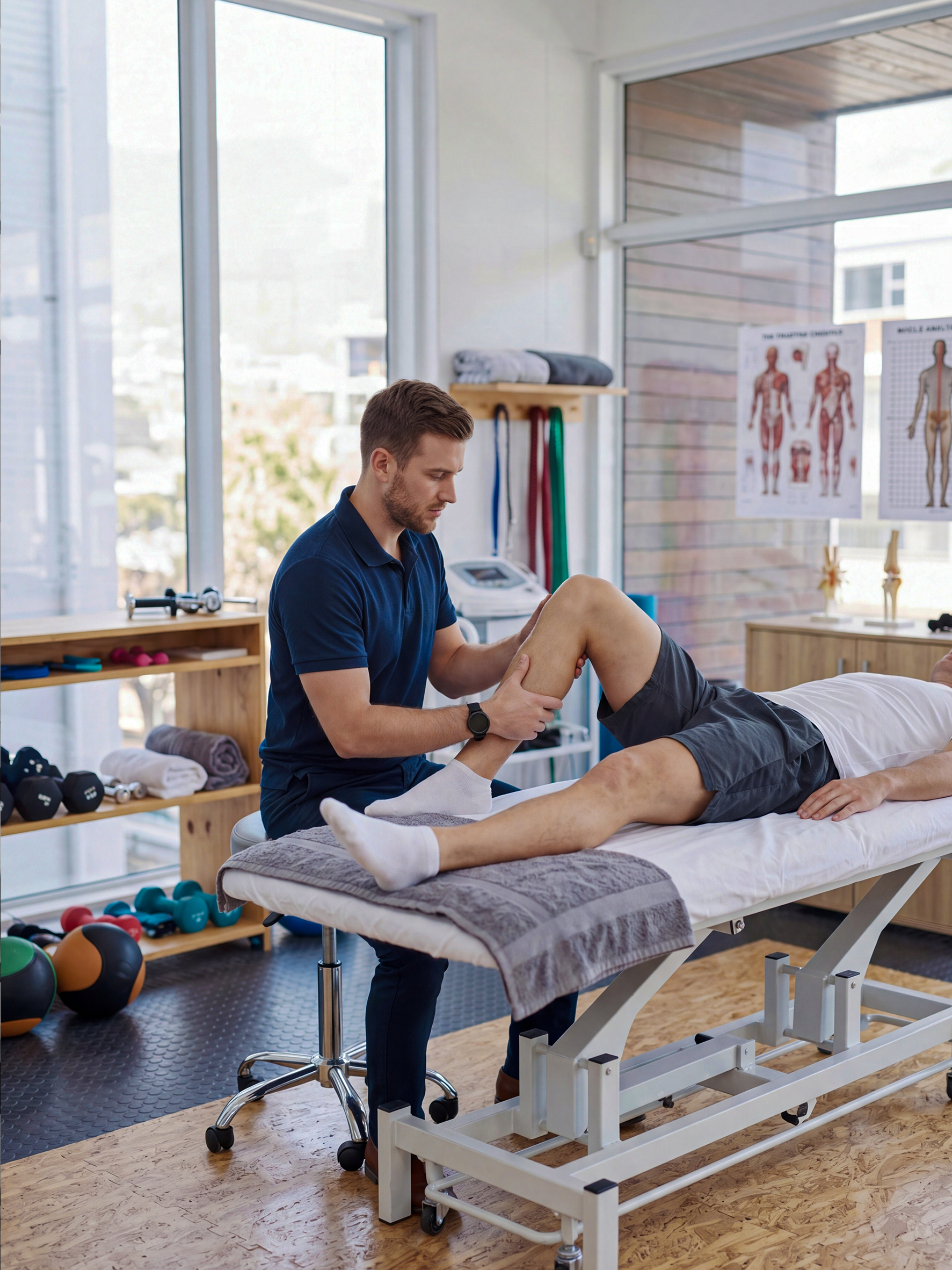


Knee Brace for Gym Training: Support Without Limiting Movement
A knee brace for gym training should support movement, not take over movement. That is the difference between a useful training accessory and something that gets in the way of squats, lunges, step-ups, leg press, cardio intervals, and lower-body conditioning.
In the gym, your knees rarely move in only one direction. A single workout may include loaded bending, controlled tempo work, lateral warm-ups, treadmill intervals, cycling, sled pushes, and bodyweight circuits. A knee support that feels fine during walking may feel too warm during HIIT. A bulky brace may feel secure at first, then limit depth or change your mechanics during squats.
This guide explains how to choose knee support for gym training without sacrificing natural movement. The goal is not to wear the strongest brace possible. The goal is to match the support level to the way you train.
This article is for general educational purposes only and is not a substitute for professional medical advice, diagnosis, or treatment. If you have sharp pain, swelling, instability, locking, numbness, a recent injury, post-surgery restrictions, or difficulty bearing weight, stop training and speak with a qualified healthcare professional before using a brace to continue exercise.
Why Gym Training Requires a Different Knee Support Strategy
Gym training is different from running, wrestling, hiking, or daily walking because the same knee may need to perform under several types of demand in one session.
During leg day, the knee may need to:
- Flex deeply during squats, split squats, and lunges
- Stay controlled during step-ups and single-leg work
- Handle repeated bending during leg press or hack squat variations
- Move quickly during HIIT circuits or agility-style warm-ups
- Stay comfortable through heat, sweat, and repeated sets
- Feel supported without changing your lifting pattern
That is why gym knee support should be evaluated by movement quality first. If a brace makes you shorten your range of motion, shift your weight awkwardly, or feel disconnected from the floor, it may not be the right support for your workout.
What a Knee Brace Can and Cannot Do in the Gym
A knee brace or compression sleeve can help provide a more supported feel during training. It may also improve comfort, joint awareness, and confidence during controlled movement.
But a brace cannot replace proper exercise selection, good coaching, progressive loading, warm-ups, rest, and technique. It also cannot guarantee injury prevention or make an unsuitable workout safe.
A practical way to think about knee support for gym training is:
- It can help the knee feel more secure during repeated movement.
- It can provide compression and a closer supported feel around the joint.
- It can help you stay more aware of knee position during sets.
- It should not force your knee into an unnatural path.
- It should not be used to ignore pain or push through warning signs.
If you are unsure what type of support fits your training routine, start with the NEENCA Knee Brace Finder before comparing individual products.
Knee Sleeve vs Knee Brace for Gym Training
Many gym users use the words “knee sleeve” and “knee brace” interchangeably, but they are not always the same thing. Understanding the difference helps you avoid choosing support that is either too light or too restrictive.
| Support Type | Best Fit | Why It Works in the Gym | What to Watch |
|---|---|---|---|
| Compression Sleeve | General workouts, warm-ups, light leg training, cardio, low-profile support | Flexible, easy to move in, less bulky, comfortable for repeated bending | May provide less structure than some athletes want for heavy or high-volume leg sessions |
| Supportive Compression Brace | Leg day, mixed training, users who want more structure than a simple sleeve | Can combine compression with patella-area support, side support, and anti-slip features | Must still allow squatting, lunging, and natural knee flexion |
| Rigid or Hinged Brace | Specific situations, usually with professional guidance | Can provide higher structure for selected needs | May feel bulky, limit movement, or be unnecessary for normal gym training |
For many gym users, the best choice is not the most rigid brace. It is often a low-profile sleeve or supportive compression brace that stays secure while still allowing controlled bending and extension.
What “Support Without Limiting Movement” Really Means
Good gym knee support should not make every rep feel guarded or stiff. It should move with you while providing enough compression or structure to feel secure.
In practical terms, this means the support should pass five tests:
- Squat test: You can reach your normal comfortable squat depth without pinching or bunching.
- Lunge test: The brace stays centered when one knee bends deeply and the other leg extends.
- Step-up test: The support does not slide down when the knee repeatedly flexes and extends.
- Heat test: It remains comfortable through multiple sets, not just the first warm-up.
- Awareness test: It helps you feel supported without making you rely on it for every movement decision.
If a brace passes these tests, it is more likely to fit the real demands of gym training.
How Different Gym Workouts Change Your Knee Support Needs
Squats and Leg Press
Squats and leg press variations involve repeated knee bending under load. For these movements, support should stay in place and allow smooth knee flexion. A brace that bunches behind the knee or creates pressure at the front of the joint can become distracting quickly.
Squat biomechanics research shows that squat technique, depth, stance, load, and individual anatomy can affect joint demands. That is why knee support should not be used as a shortcut for technique. It should work with your movement, not compensate for poor setup.
Lunges, Split Squats, and Step-Ups
Single-leg and staggered-stance exercises challenge balance and control. The knee support should stay aligned as the knee travels forward, bends, and extends. If it rotates around the leg, slides down, or changes how you place your foot, it may not be secure enough for this type of training.
Deadlifts and Hip-Dominant Training
Deadlifts, Romanian deadlifts, hip thrusts, and glute-focused work may not bend the knee as deeply as squats, but the knee still contributes to setup and control. A low-profile sleeve may be enough for users who want light compression without bulk.
HIIT, Circuits, and Conditioning
HIIT and circuit training can combine bodyweight squats, jump-free conditioning, sled work, step-ups, cycling, treadmill intervals, and fast transitions. For this style of training, breathability and anti-slip design become especially important.
A support product that feels secure during one slow set may not stay comfortable during a sweaty 30-minute circuit.
When a Lighter Support Option Makes Sense
A lighter supportive compression option may be the right starting point if you mainly want a low-profile feel during general training.
This direction may fit:
- Warm-ups and mobility sessions
- Moderate leg-day training
- Machine-based lower-body exercises
- Cardio machines and treadmill walking
- Bodyweight squats, step-ups, and controlled circuits
- Gym users who want support without a bulky brace feel
For athletes who want a lighter supportive compression option with kneecap cushioning and flexible side stabilizers, the NEENCA ACE-50 Professional Knee Brace is one product direction to compare.
When a More Supportive Gym Knee Brace Makes Sense
A more supportive brace may make sense when your workouts include longer leg sessions, more demanding lower-body training, or repeated movements where you want a more secure feel.
This direction may fit:
- Higher-volume leg days
- Mixed workouts that combine strength and conditioning
- Training sessions with squats, lunges, step-ups, and machines
- Users who want patella-area support
- Users who prefer side stabilizers for a more structured feel
- Active routines where slipping is a concern
The NEENCA ACE-51 Professional Knee Brace is designed with targeted compression, a patella gel pad, dual spring side stabilizers, breathable 3D knit fabric, and anti-slip construction for active movement support.
When a Rigid Brace May Be Too Much for Gym Training
Rigid and hinged braces can provide more structure, but more structure is not always better for gym training. A bulky brace can change how you squat, limit flexion, interfere with machines, or make conditioning work uncomfortable.
If you are recovering from an injury, returning after surgery, or dealing with instability, choose support with professional guidance. In those cases, the question is not simply “Which brace feels strongest?” The better question is “What support matches my current training restrictions and return-to-activity plan?”
Fit Matters More Than Most People Think
A knee brace that is the wrong size will not perform well in the gym. Too loose, and it can slide during repeated bending. Too tight, and it may pinch, distract you, or create discomfort during longer sessions.
A good gym knee brace should:
- Stay centered over the kneecap area
- Feel snug but not restrictive
- Allow deep bending without bunching
- Stay in place during sweat and repeated sets
- Not leave numbness, tingling, or unusual pressure marks
- Feel comfortable after warm-up, not just when standing still
Before choosing a product, use the NEENCA Find Your Size guide and follow the product-specific size chart. Do not choose a brace only by height, weight, or your usual clothing size.
How to Test a Knee Brace Before a Full Workout
Do not wait until your heaviest set to find out whether a knee brace fits your gym routine. Test it during low-risk movement first.
A simple gym test can include:
- A brief easy warm-up before loaded movements
- Bodyweight squats
- Reverse lunges or split-stance movement
- Step-ups or controlled machine work
- A few light working sets before increasing load
- A fit check after you start sweating
If the support slides, bunches, pinches, or changes your technique, adjust the fit or choose another support level before continuing.
Common Mistakes Gym Users Make With Knee Support
Choosing the Stiffest Brace by Default
A stronger-looking brace is not automatically a better gym brace. For many workouts, flexibility, fit, and comfort matter more than maximum structure.
Using a Brace Instead of Adjusting Training Load
If your knee feels uncomfortable every time you increase weight, speed, or volume, the answer may not be a new brace. You may need to adjust load, range of motion, tempo, exercise selection, recovery, or technique.
Ignoring Warm-Up Quality
A knee support product should not replace warm-up sets. Gradual preparation helps you assess how your body feels before heavier work.
Wearing the Wrong Size
Many slipping problems are sizing problems. Many pinching problems are also sizing problems. Measure carefully and follow the size chart for the specific product.
Training Through Warning Signs
Do not use a knee brace to push through sharp pain, swelling, instability, locking, numbness, or symptoms that get worse during exercise.
How to Choose the Right NEENCA Knee Brace for Gym Training
Start with the type of training you do most often, then match the support level to that routine.
| Training Need | Support Direction | Why It May Fit |
|---|---|---|
| General workouts and light-to-moderate leg day | Lighter supportive compression | Low-profile feel, flexible movement, easier for repeated bending |
| Higher-volume leg training or mixed strength and conditioning | Supportive compression brace | More structured support with compression, patella-area support, and anti-slip features |
| Return-to-training after injury or surgery | Professional-guided support | Support choice should match medical guidance and training restrictions |
To compare more support levels, browse the NEENCA Knee Braces Collection and choose based on your workout type, fit needs, and preferred support level.
Final Thoughts
The right knee brace for gym training should help you feel supported without making your workout feel restricted. It should stay in place during repeated movement, allow comfortable bending, manage heat and sweat, and work with your training style.
For many gym users, a low-profile supportive compression option is enough. Others may prefer a more structured brace for higher-volume leg days or mixed strength and conditioning. The best choice depends on your movement, support needs, comfort, and fit.
Most importantly, do not use knee support to ignore symptoms. A brace can support training, but it cannot replace smart programming, good technique, recovery, and professional guidance when something feels wrong.
Frequently Asked Questions
Should I wear a knee brace while lifting weights?
Some gym users wear knee support for comfort, compression, and a more secure feel during training. Whether it makes sense depends on your workout, support needs, fit, and whether you can move naturally while wearing it.
Can I squat with a knee brace?
You can squat with knee support if it allows comfortable bending, stays centered, and does not change your technique. If the brace pinches, bunches, or limits your normal safe range of motion, it may not be the right fit for squats.
Is a knee sleeve enough for leg day?
A sleeve or lighter supportive compression option may be enough for general leg training. If you want more structure, patella-area support, or side support, a supportive compression brace may be a better direction to compare.
Should I wear a knee brace for every workout?
Not necessarily. Some people use knee support only for leg day, longer sessions, or workouts with repeated bending. Others prefer not to wear support for every session. Your choice should depend on comfort, training demands, and professional guidance if symptoms are present.
When should I stop training and get my knee checked?
Stop training and seek guidance if you experience sharp pain, swelling, instability, locking, numbness, tingling, difficulty bearing weight, or symptoms that worsen during exercise.
References
- Currier BS, D'Souza AC, Singh MAF, et al. American College of Sports Medicine Position Stand. Resistance Training Prescription for Muscle Function, Hypertrophy, and Physical Performance in Healthy Adults: An Overview of Reviews. Medicine & Science in Sports & Exercise. 2026.
https://pmc.ncbi.nlm.nih.gov/articles/PMC12965823/ - Aasa U, Svartholm I, Andersson F, Berglund L. Which Resistance Training Is Safest to Practice? A Systematic Review. Journal of Functional Morphology and Kinesiology. 2023.
https://pmc.ncbi.nlm.nih.gov/articles/PMC10099898/ - Straub RK, Powers CM. A Biomechanical Review of the Squat Exercise: Implications for Clinical Practice. International Journal of Sports Physical Therapy. 2024.
https://pmc.ncbi.nlm.nih.gov/articles/PMC10987311/ - Siewe J, et al. Injuries in Weightlifting and Powerlifting: An Updated Systematic Review. BMJ Open Sport & Exercise Medicine. 2024.
https://pmc.ncbi.nlm.nih.gov/articles/PMC11624822/ - Rojas-Jaramillo A, Cuervo-Arango DA, Quintero JD, et al. Impact of the Deep Squat on Articular Knee Joint Structures, Friend or Enemy? A Scoping Review. Frontiers in Sports and Active Living. 2024.
https://pmc.ncbi.nlm.nih.gov/articles/PMC11618833/



Оставить комментарий
Этот веб-сайт защищается hCaptcha. Применяются Политика конфиденциальности и Условия использования hCaptcha.