


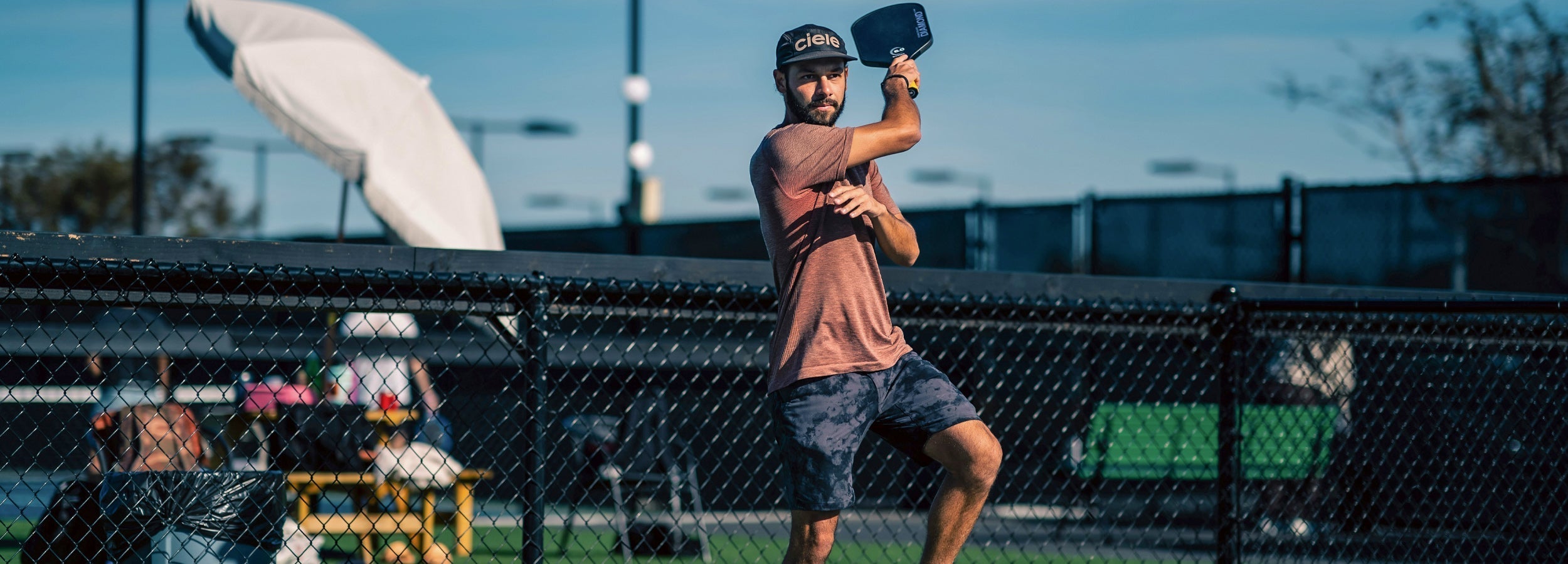
Pickleball Is Easy to Love. Your Knees Might Need a Little More Convincing.
For many people, pickleball starts the same way.
A neighbor invites you to join a game.
A friend from the gym won't stop talking about it.
Or maybe you see a few courts packed with players and decide to give it a try yourself.
At first, it seems simple enough. The court is smaller than a tennis court, the paddle is lightweight, and the game feels approachable—even if you haven't played sports in years.
Then a few games later, you notice something.
Your knees are talking back.
Not necessarily an injury. Just a little soreness. A bit of stiffness getting out of the car. Maybe a reminder that your joints don't recover quite as quickly as they used to.
If that sounds familiar, you're far from alone.
Why So Many Adults Are Discovering Pickleball
Pickleball isn't just popular—it's growing at a remarkable pace.
According to the Sports & Fitness Industry Association (SFIA), more than 24 million Americans played pickleball in 2025, with participation increasing by over 170% in just three years. Older adults continue to make up a significant portion of the sport's player base, drawn by its social atmosphere and relatively accessible learning curve. (Source: SFIA Participation Report; The Dink Pickleball)
That combination is part of pickleball's appeal.
It provides movement, social interaction, and friendly competition without the high-impact demands of sports like basketball or running.
But "lower impact" doesn't mean "no impact."
Why Knees Often Become the First Concern
One reason pickleball feels so accessible is that it doesn't require sprinting the length of a football field or jumping over obstacles.
Instead, it relies on dozens of smaller movements:
- Quick side-to-side shuffles
- Sudden stops and starts
- Reaching and lunging for shots
- Frequent changes in direction
Individually, these movements may not seem demanding.
Over the course of a long match, however, they can add up quickly.
A nationwide study published in Sports Medicine Open found that the knee was among the most commonly reported injury locations in pickleball players. Researchers identified strains, sprains, and meniscus-related issues as recurring concerns, particularly among recreational athletes. (Source: Owoeye et al., 2025)
Another 10-year analysis of pickleball-related orthopedic injuries reported that approximately 91% of injuries occurred in adults aged 50 and older, highlighting the importance of joint health as participation continues to rise. (Source: Tobin et al., 2025)
Those numbers aren't meant to discourage anyone from playing.
In fact, they point to something much more encouraging:
Most players can take practical steps to reduce risk and continue enjoying the game for years to come.
Small Habits That Can Make a Big Difference
Ask experienced pickleball players what keeps them on the court year after year, and you'll hear many of the same answers.
Warm Up Before You Play
A few minutes of dynamic movement before a game can help prepare your muscles and joints for activity.
Leg swings, walking lunges, and light side shuffles are simple ways to get moving before the first serve.
Build Strength Around the Knee
Strong quadriceps, hamstrings, glutes, and calves help absorb force and support stability during play.
Research consistently shows that lower-body strength and balance training can play an important role in maintaining joint function and reducing injury risk in active adults. (Source: Innovations Physio Injury Prevention Guide)
Wear Proper Court Shoes
Many new players show up in running or walking shoes.
Court shoes are designed specifically for lateral movement and can provide better support during quick changes of direction.
Respect Recovery
One of the most common mistakes new players make is playing too much, too soon.
When you finally find a sport you genuinely enjoy, it's easy to want to play every day.
Your enthusiasm may be ready for that schedule.
Your knees might not be.
When Extra Support Makes Sense
Many pickleball players choose to wear a knee brace not because they're injured, but because they appreciate the added sense of support during long matches or frequent play.
This is especially common among:
- Players returning to sports after a long break
- Adults experiencing age-related changes in joint comfort
- Individuals with a history of knee discomfort
- Players participating multiple times each week
NEENCA ACE-50 knee braces are designed to provide comfortable compression and targeted support while allowing natural movement on the court.
Features such as patella support, side stabilizers, and breathable knit construction help create a secure fit that remains comfortable during extended play.
For many players, that added confidence can make it easier to focus on enjoying the game rather than thinking about their knees.
Play for the Long Run
One of the best things about pickleball is that it doesn't require you to be a professional athlete.
People start playing in their 40s, 50s, 60s, and beyond.
They play to stay active. To spend time with friends. To challenge themselves. To have fun.
Taking care of your knees isn't about avoiding activity—it's about making sure you can keep enjoying it.
Because the real goal isn't simply getting through today's match.
It's being ready for the next one.
References
Sports & Fitness Industry Association (SFIA).
2026 Topline Participation Report.
The Dink Pickleball.
Report: 24 Million Americans Are Now Playing Pickleball, Up 171% in Just 3 Years (2026).
Owoeye O.B.A., Yemm T., Blechle R., Wayne M.
Understanding Injury Patterns and Predictors in Pickleball Players: A Nationwide Study of 1,758 Participants. Sports Medicine Open, 2025.
Tobin J., Abbasi T., Nguyen J., Dunn P., Cashin I., Chung M.
Rising Orthopedic Injuries in Pickleball: Insights from a 10-Year National Study. AOAO, 2025.
Towson Orthopaedic Associates.
Most Common Pickleball Injuries (And How to Prevent Them).
Innovations Physio.
Pickleball Injury Prevention Guide.

Ecrit par Wilson John



Laisser un commentaire
Ce site est protégé par hCaptcha, et la Politique de confidentialité et les Conditions de service de hCaptcha s’appliquent.