




Knee Brace for Tennis: Support for Lateral Movement and Quick Stops
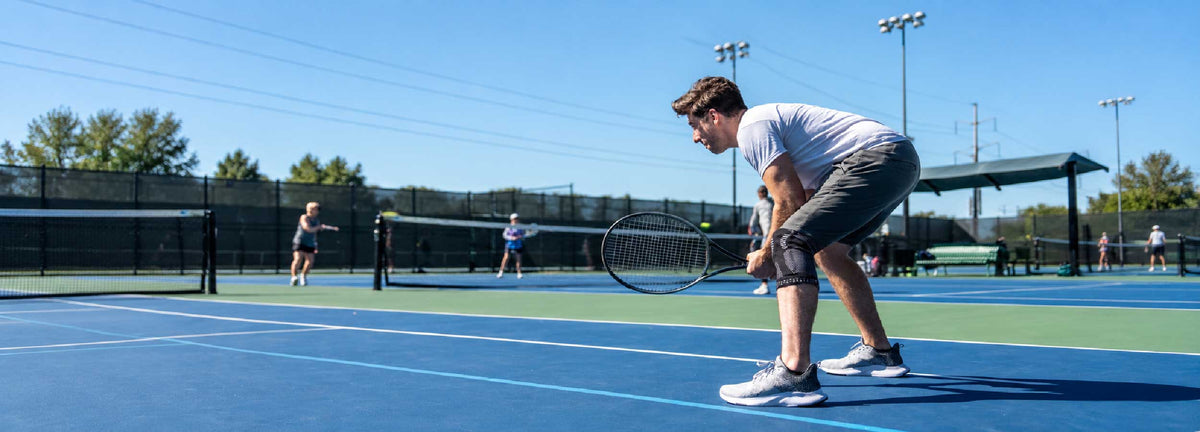
Tennis asks the lower body to do more than run in a straight line. Players repeatedly move side to side, decelerate, recover toward the center of the court, and change direction again—often within a few seconds. Research using player-tracking data from professional matches has shown that change-of-direction actions are a regular part of tennis movement, while biomechanical studies also show that different tennis stances can change the loads placed on the knee.1, 2
That does not mean every tennis player needs a heavy brace. For many recreational players, the better question is: what level of knee support can stay secure during lateral movement and quick stops without making normal court movement feel unnecessarily restricted?
This guide explains how to compare a knee brace for tennis based on movement demands, fit, breathability, support level, and wearing comfort. It is a practical buying guide—not a promise that a brace can prevent injury or replace professional evaluation.
Quick Answer: What Type of Knee Brace Makes Sense for Tennis?
Start with the amount of structure you actually want:
- Lightweight stabilized compression is a practical starting point if you prioritize flexibility, breathability, and low bulk.
- Firmer stabilized compression may suit players who prefer a more noticeable wrap around the knee.
- Adjustable or hinged support may make sense if you intentionally want more side structure and strap adjustment.
The strongest-looking brace is not automatically the best tennis choice. A useful brace should stay centered during side-to-side movement, allow comfortable knee flexion, and remain wearable through the length of your normal session.
Why Tennis Changes the Fit Equation
A brace that feels comfortable while walking may behave differently on court. Tennis combines short accelerations, lateral shuffles, split steps, pivots, braking, and repeated knee flexion. A 2024 analysis of Australian Open match play found that players performed frequent changes of direction throughout points, with many involving substantial changes in movement angle.1
A tennis-specific biomechanics study also found that forehand stance can change knee flexion, frontal-plane motion, ground-reaction forces, and joint loading.2 These findings do not tell an individual player which brace to buy, but they explain why a tennis brace should be evaluated during real movement, not only while standing still.
For tennis, four practical requirements matter most:
- Secure positioning: the brace should stay centered as you move laterally and change direction.
- Enough flexibility: the knee still needs to bend naturally for split steps, low balls, serves, and recovery steps.
- Breathability: long rallies and warm courts can make a thick brace feel noticeably hotter.
- Appropriate structure: some players want light compression; others prefer more side support or adjustable straps.
Compression Sleeve, Stabilized Brace, or Hinged Brace?
The right starting point depends less on the word “tennis” and more on how much structure you want. If you need a full explanation of the differences between these support types, read Knee Sleeve vs Knee Brace: What’s the Difference?. For tennis specifically, the decision is mainly about balancing support with court mobility.
Lightweight stabilized compression
A pull-on stabilized compression design keeps bulk relatively low while adding features such as patella cushioning and flexible side stabilizers. This style can be a good starting point when your priorities are:
- easy bending and lateral movement;
- a close-to-the-leg fit;
- breathable materials for longer sessions;
- support without rigid hinges or multiple straps.
Within the NEENCA range, the ACE-50 takes a lighter, softer approach and is designed to feel less bulky than thicker stabilized compression options. The ACE-39 combines a lightweight, flexible compression knit with patella cushioning and flexible side stabilizers. Both can be compared by players who want structured compression without moving into a hinged design.
Firmer compression
Some players prefer a more noticeable wrap around the knee. A thicker stabilized compression brace can provide that firmer wearing feel, but more compression is not automatically better for tennis. A brace that is too tight, too hot, or difficult to keep positioned may become distracting during long matches.
The ACE-51 is one example of a thicker stabilized compression option for users who prefer a stronger wrap feel while still wanting a flexible sleeve-style design. The key question is whether that extra material feels comfortable during repeated bending, quick stops, and longer court sessions.
Adjustable or hinged support
A hinged brace adds more side structure than a typical compression sleeve. It may appeal to players who specifically prefer adjustable straps and a more structured feel, but it is also bulkier and should not be treated as an automatic upgrade.
The NEENCA HX042/HX035 uses removable side hinges and front-crossing X-straps. That gives it more side structure and adjustment than a fixed pull-on sleeve. For tennis, this type of brace is better viewed as an option for someone who intentionally wants more structure—not as the default simply because tennis involves quick movement.
Evidence on knee orthoses is also highly dependent on brace design and the problem being studied. A 2024 review covering unloader, patellofemoral, and knee-sleeve orthoses found meaningful differences in how these designs are intended to work, while also emphasizing that clinical findings remain inconsistent across studies.6
What to Look For in a Tennis Knee Brace
1. A fit that stays centered during lateral movement
A tennis brace should remain aligned with the kneecap and surrounding support structures as you shuffle, plant, and recover. If it repeatedly slides down, rotates, or bunches behind the knee, the problem may be sizing, leg shape, moisture, or the brace design itself.
Before playing a full match, test the brace with side shuffles, controlled split steps, short forward-and-back recovery steps, gentle changes of direction, and several practice serves or groundstrokes. If you have to reposition it every few movements, it is not functioning well as a tennis fit even if it feels fine while standing.
2. Enough flexion for low balls and recovery steps
Tennis repeatedly brings the knee into different degrees of flexion. The brace should not create a hard pressure point behind the knee when you bend, especially during low defensive shots or wide recovery steps.
More material can create a more substantial wearing feel, but thickness should match the purpose. A recreational player seeking light court support may prefer a lower-profile stabilized sleeve, while someone who specifically wants adjustable structure may accept more bulk.
3. Breathability for longer matches and warm courts
Heat management matters because tennis sessions can last much longer than a brief gym set. Sweat can also change how a sleeve grips the skin. Look for a fabric and compression level you can tolerate for the duration of your normal play.
For players who prioritize airflow and low bulk, a lighter knit design may be easier to live with than a heavily padded or strap-intensive brace. Breathability should still be considered alongside fit, because even a lightweight brace becomes distracting if it continually slips.
4. Side support without unnecessary rigidity
Lateral movement is central to tennis, but “more rigid” is not automatically “more appropriate.” The amount of structure should match what you actually want from the brace.
| What You Want | Starting Point | What to Prioritize |
|---|---|---|
| Light, breathable support | Lightweight stabilized compression | Low bulk, airflow, flexible movement |
| Flexible support with a secure sleeve fit | Stabilized compression brace | Patella cushioning, side stabilizers, anti-slip fit |
| Firmer compression feel | Thicker stabilized compression | Wrap feel, comfort, heat management |
| More adjustable side structure | Hinged or strap-adjustable brace | Strap placement, hinge comfort, freedom to bend |
5. A brace you can stop thinking about once the point starts
A good tennis fit should not demand constant attention. If you keep thinking about slipping, bunching, heat, or pressure, the brace may be too distracting for the way you play.
This is why the “strongest” brace is not necessarily the most useful choice. Support should be balanced against comfort and mobility.
How Tight Should a Tennis Knee Brace Feel?
For tennis, the brace should feel secure enough to stay centered through lateral movement without causing painful pressure, numbness, tingling, pinching, unusual skin-color changes, or difficulty bending the knee.
If the brace repeatedly slips, do not solve the problem by tightening it indefinitely. Recheck the product-specific measurement instructions, brace position, and whether that design suits your leg shape. For a full fit and sizing guide, read How Tight Should a Knee Brace Be?.
Compression, Proprioception, and What the Evidence Actually Says
Compression garments are often described as improving “body awareness” or proprioception. The evidence is more nuanced. A 2024 systematic review and meta-analysis of 27 studies found improvement in one measure of joint position sensing, but other proprioceptive outcomes did not show significant effects.5
Earlier research in healthy active participants also found no statistically significant change in passive knee movement detection when comparing a knee brace, a sleeve, and no support.7
The practical takeaway is simple: do not choose a tennis brace because of a claim that it will automatically improve athletic performance, reaction time, or injury prevention. Choose it for characteristics you can evaluate directly—fit, comfort, compression level, support structure, breathability, and whether it stays in place during your movement.
Does Playing Surface Change What You Should Consider?
Court surface changes traction and movement feel, but it should not be used as a shortcut for prescribing a brace. Injury research in tennis shows that playing conditions, training volume, experience, and prior injury can all affect injury patterns, while research in recreational tennis also shows that lower-extremity injuries are common in acute presentations.3, 4
Instead of assuming that hard court, clay, or grass requires a particular brace, use your normal playing surface as part of the fit test:
- Does the brace stay positioned when you stop quickly?
- Does it bunch when you recover laterally?
- Does sweat make it feel less secure?
- Can you still bend comfortably during low shots?
Your playing style, session length, fit, and support preference matter more than a universal surface rule.
How to Choose a NEENCA Knee Brace for Tennis
There is no single NEENCA model that is automatically “the tennis brace.” A better way to choose is to start with the wearing feel and level of structure you prefer.
| Model / Type | Wearing Feel | Consider It If... |
|---|---|---|
| ACE-50 | Lighter, softer, lower-bulk stabilized compression | You prioritize airflow, flexible movement, and long-session comfort. |
| ACE-39 | Lightweight, flexible compression with side stabilizers | You want balanced support in a flexible sleeve-style design. |
| ACE-51 | Thicker, more noticeable compression | You prefer a stronger wrap feel and are comfortable with more material. |
| HX042/HX035 | Adjustable, more structured hinged support | You intentionally want removable side hinges and adjustable X-straps. |
If you are still deciding which support level fits your activity and wearing preference, use the NEENCA Knee Brace Finder rather than choosing only by product name or appearance.
When a Knee Brace Is Not the Main Answer
A brace can provide external support and may make movement feel more secure, but it does not diagnose the reason for knee symptoms and it should not be used to push through a significant injury.
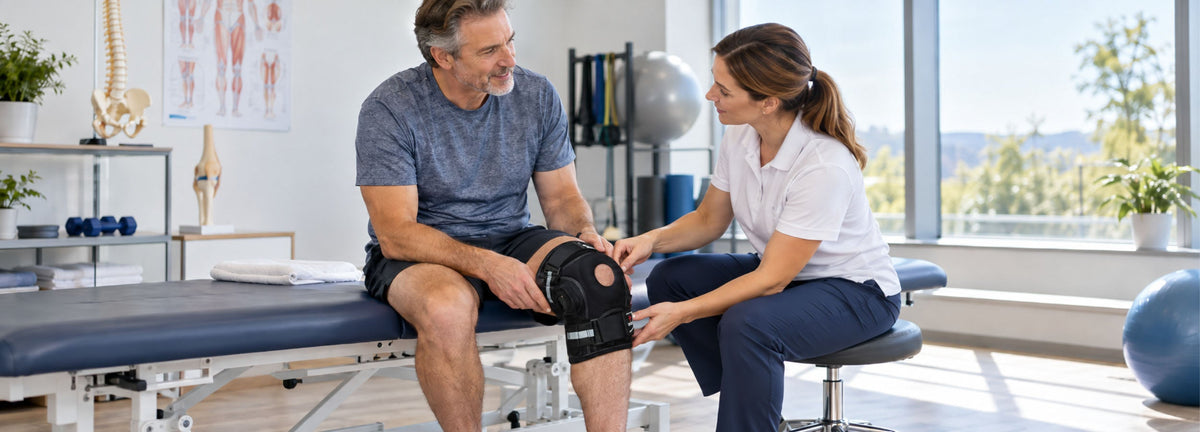
Seek professional evaluation if you have a recent traumatic knee injury, significant swelling, locking, repeated giving-way, difficulty bearing weight, a visible deformity, or symptoms that continue to worsen. Players returning after surgery or a diagnosed ligament, meniscus, or other knee injury should follow the recommendations of their clinician or rehabilitation professional rather than choosing support solely from an online buying guide.
Practical Tennis Brace Checklist
Before keeping a brace as part of your tennis setup, ask:
- Does it remain centered during lateral shuffles and quick stops?
- Can I bend comfortably for low shots and recovery steps?
- Is the compression secure without numbness, tingling, or pinching?
- Can I tolerate the material for the length of my normal session?
- Does the brace stay in place after I start sweating?
- Am I choosing the amount of structure I actually need rather than the bulkiest option?
If the answer to several of these questions is no, a different size or brace style may be a better match.
Frequently Asked Questions
Can I wear a knee brace under tennis leggings or compression tights?
It depends on the brace and clothing. A low-profile sleeve may fit comfortably under some leggings, while hinged or strap-based braces usually need more space. The brace should stay flat, remain centered, and not become more restrictive because of the layer over it.
Should I put my knee brace on before warming up?
If you plan to play in the brace, putting it on before your tennis-specific warm-up gives you a chance to test the fit during shuffles, bending, and direction changes before match intensity increases. Recheck its position if it shifts as you warm up.
Do singles and doubles players need different knee braces?
Not necessarily. Singles often involves more court coverage, while doubles may involve less total running but still requires quick reactions and lateral movement. Choose the brace according to your movement demands, session length, fit, and preferred support level rather than the match format alone.
Final Takeaway
The best knee brace for tennis is not necessarily the heaviest or most rigid option. Tennis requires repeated lateral movement, braking, recovery steps, and knee flexion, so a useful brace should balance secure fit, appropriate support, breathability, and freedom of movement.
Start with your actual preference: lightweight stabilized compression, a firmer wrap, or more adjustable structure. Then test the brace during tennis-specific movement rather than judging it only while standing still. A support that stays comfortable and centered throughout your normal session is usually more useful than one that offers more structure than you need.
Medical disclaimer: This article is for general educational purposes only and is not a substitute for medical advice, diagnosis, or treatment. Consult a qualified healthcare professional for a recent injury, persistent or severe symptoms, post-surgical guidance, or questions about returning to sport.
References
- Giles B, Peeling P, Reid M. Quantifying Change of Direction Movement Demands in Professional Tennis Matchplay: An Analysis From the Australian Open Grand Slam. Journal of Strength and Conditioning Research. 2024;38(3):517-525.
- Martin C, Sorel A, Touzard P, Bideau B, Gaborit R, DeGroot H, Kulpa R. Influence of the Forehand Stance on Knee Biomechanics: Implications for Potential Injury Risks in Tennis Players. Journal of Sports Sciences. 2021;39(9):992-1000.
- Minghelli B, Cadete J. Epidemiology of Musculoskeletal Injuries in Tennis Players: Risk Factors. Journal of Sports Medicine and Physical Fitness. 2019;59(12):2045-2052.
- Kaiser P, Stock K, Benedikt S, Ellenbecker T, Kastenberger T, Schmidle G, Arora R. Acute Tennis Injuries in the Recreational Tennis Player. Orthopaedic Journal of Sports Medicine. 2021;9(1):2325967120973672.
- Ghai S, Nilson F, Gustavsson J, Ghai I. Influence of Compression Garments on Proprioception: A Systematic Review and Meta-analysis. Annals of the New York Academy of Sciences. 2024;1536(1):60-81.
- Dzidotor GK, Moorhead JB Jr, Ude CC, Ogueri KS, Ghosh D, Laurencin CT. Functions and Effectiveness of Unloader, Patellofemoral, and Knee Sleeve Orthoses: A Review. Regenerative Engineering and Translational Medicine. 2024;10(2):147-171.
- Bottoni G, Herten A, Kofler P, Hasler M, Nachbauer W. The Effect of Knee Brace and Knee Sleeve on the Proprioception of the Knee in Young Non-professional Healthy Sportsmen. Knee. 2013;20(6):490-492.



Laisser un commentaire
Ce site est protégé par hCaptcha, et la Politique de confidentialité et les Conditions de service de hCaptcha s’appliquent.