




Artículo: Knee Brace for Basketball: Support for Cutting, Jumping, and Landing

Knee Brace for Basketball: Support for Cutting, Jumping, and Landing
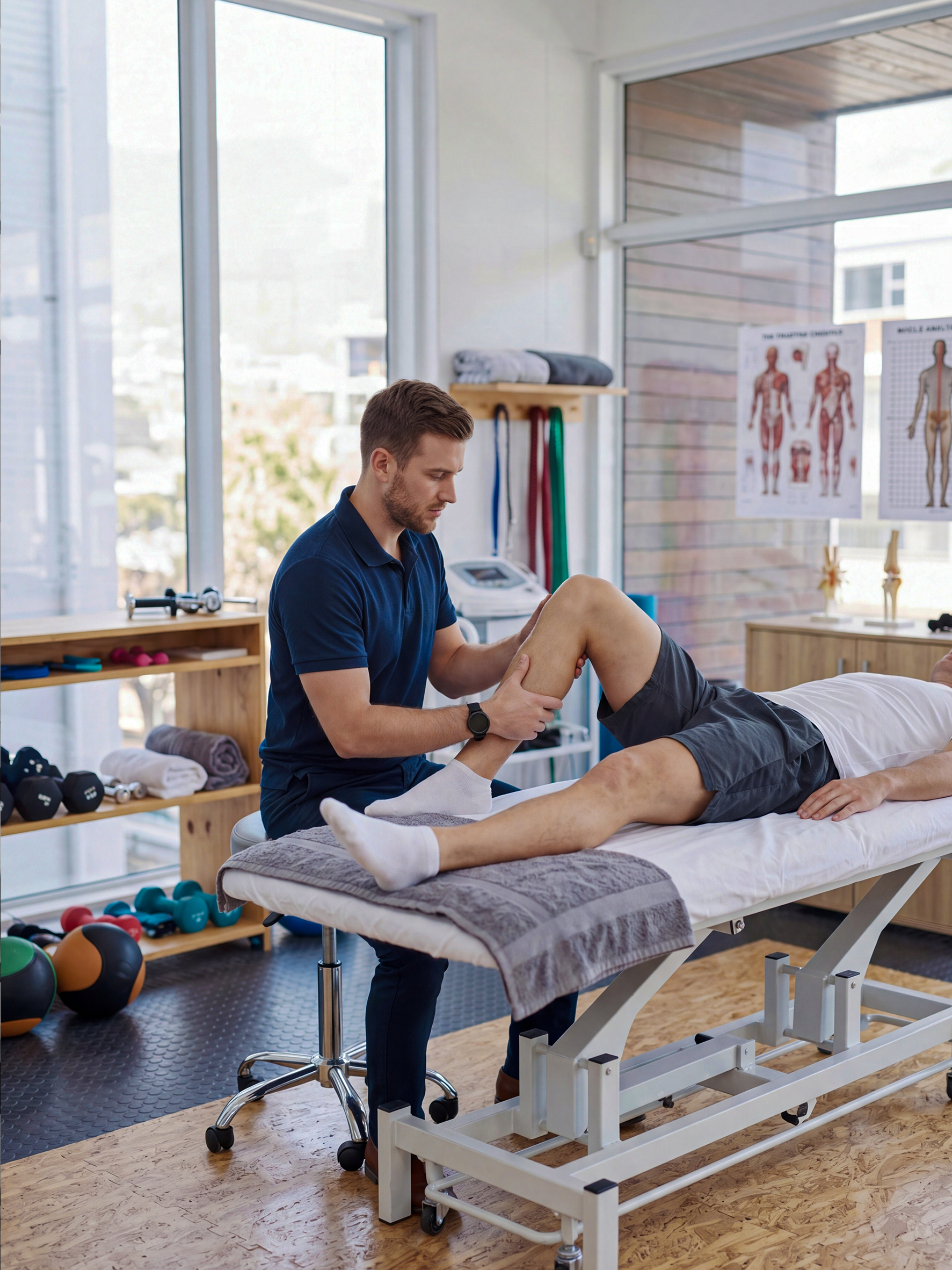
Basketball rarely asks the knee to move in just one direction. A possession can include a sprint, a hard stop, a defensive slide, a cut toward the basket, a jump, and a landing—all within a few seconds. That is why choosing a knee brace for basketball is not simply about finding the strongest brace available. The better question is whether the support stays secure through cutting, jumping, and landing without making normal court movement feel unnecessarily restricted.
This guide explains how to compare knee braces for basketball by support level, fit, mobility, breathability, and brace structure. It is designed to help recreational and competitive players make a clearer product decision, not to suggest that a brace can prevent every injury or replace medical evaluation.
Quick Answer: What Type of Knee Brace Works Best for Basketball?
For many players, a good starting point is a stabilized compression brace that adds patella cushioning and flexible side support without the bulk of rigid hinges. Players who prioritize a lighter feel may prefer a lower-profile option, while those who want a firmer wrap may prefer thicker compression. A hinged brace makes more sense when a player intentionally wants more adjustable side structure or has been advised to use a more supportive design.
In simple terms:
- Lightweight stabilized compression: best suited to players who prioritize mobility, breathability, and low bulk.
- Firmer stabilized compression: for players who prefer a stronger wrap around the knee while keeping a sleeve-style design.
- Adjustable or hinged support: for players who specifically want more side structure and strap adjustment.
The goal is not maximum structure. The goal is the right amount of structure for the way you move.
Why Basketball Is a Different Test for a Knee Brace
Basketball combines stop-and-go running with cutting, pivoting, repeated knee flexion, jumping, and landing. The American Orthopaedic Society for Sports Medicine highlights frequent stopping, cutting, and jumping as part of the sport’s knee-injury context.1 A 2024 video analysis of ACL injuries in male professional basketball also identified cutting and jump-landing situations among the sport-specific scenarios in which serious knee injuries occurred.3
More recent epidemiology supports the broader picture. A 2025 systematic review and meta-analysis of basketball injuries found that ankle and knee injuries were among the most frequently reported body locations, with knee injuries accounting for a meaningful share of the total injury burden across the included studies.2 That does not mean every player needs a brace. It does mean that any support product used for basketball should be judged during sport-specific movement rather than only while walking or standing.
Cutting and landing also change lower-limb biomechanics in ways that matter for how a brace feels during play. A 2025 systematic review and meta-analysis found that unanticipated side-step cutting and landing altered several trunk, hip, and knee variables, including knee flexion and knee-abduction-related measures.8 The practical takeaway for a buyer is straightforward: a basketball brace should remain comfortable not only when the knee is straight, but also when the player decelerates, bends, cuts, jumps, and lands repeatedly.
Cutting, Jumping, and Landing Create Three Different Fit Challenges
Cutting: the brace has to stay centered
During a lateral cut or defensive slide, the leg moves quickly in the frontal and transverse planes. A brace that twists around the knee, slides down, or bunches at the back can become distracting within a few possessions.
For cutting-heavy play, focus on:
- secure positioning around the kneecap;
- anti-slip construction;
- side stabilizers that move with the leg rather than against it;
- enough flexibility for lateral steps and direction changes.
This is one reason a stabilized compression sleeve often makes more sense as a first basketball option than the bulkiest brace available.
Jumping: support should not fight knee flexion
Basketball jumping includes layups, rebounds, jump shots, blocks, and repeated short hops around the paint. A brace should allow natural knee flexion and extension without creating a hard pressure point behind the knee.
If the brace feels fine during standing but digs into the back of the knee during a squat or vertical jump, that is a sign the fit or brace style may not match the movement demands of the sport.
Landing: the brace must remain comfortable after impact
Landing is not one single motion. Players may land on two feet, one foot, off balance, while turning, or while preparing for the next movement. Recent biomechanical evidence shows that unanticipated landing can change hip and knee positions at initial contact, reinforcing why a brace needs to remain comfortable across different landing patterns rather than only during straight-ahead movement.8
A basketball brace should therefore remain stable after repeated impacts without forcing the player to stop and readjust it. If the brace repeatedly migrates downward after jumps, fit and sizing should be checked before simply tightening it further.
Knee Sleeve, Stabilized Brace, or Hinged Brace for Basketball?
If you are unsure how these categories differ, start with Knee Sleeve vs Knee Brace: What’s the Difference?. For basketball specifically, the most useful distinction is how much structure you want to add without sacrificing court movement.
Basic compression sleeve
A simple sleeve provides flexible compression with minimal bulk. It may suit players who want a close-to-the-leg feel and are not looking for additional patella cushioning, side stabilizers, or straps.
The tradeoff is that a basic sleeve usually offers less structural support than a stabilized brace.
Stabilized compression brace
This category adds features such as a contoured patella pad, flexible side stabilizers, anti-slip construction, or more targeted compression. For many basketball players, this is the most balanced starting point because it adds more structure than a basic sleeve while remaining more flexible than a hinged brace.
The NEENCA ACE-50, for example, uses breathable compression knit, a contoured patella gel pad, and flexible side stabilizers while keeping a lower-profile design. NEENCA lists basketball among its intended sports-use scenarios.
Players who prefer a firmer wrap may compare a thicker stabilized compression model such as ACE-51 or HX053. The important point is that thicker compression should be chosen because you prefer that wearing feel—not because thicker automatically means better basketball performance.
Hinged and adjustable support
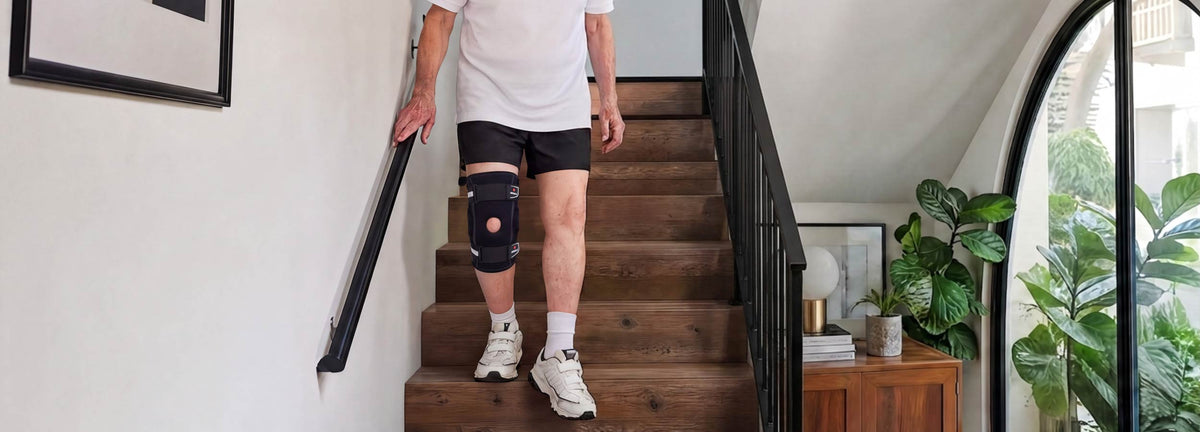
A hinged brace adds more side structure and typically more adjustment. The NEENCA HX042/HX035 uses removable side hinges and front-crossing X-straps, giving it a more structured and adjustable fit than a pull-on stabilized sleeve.
That can be useful for players who intentionally want more support, but a hinged brace is also bulkier. It should not be treated as the automatic “best” basketball option simply because the sport involves cutting and jumping.
How Much Support Do You Actually Need?
A practical way to choose is to match support level to your preference rather than the intensity of the sport alone.
| Your Priority | Starting Point | What to Look For |
|---|---|---|
| Maximum mobility and low bulk | Light compression sleeve | Stretch, breathability, low profile |
| Balanced court support | Stabilized compression brace | Patella cushioning, flexible side stabilizers, anti-slip fit |
| Firmer wrap feel | Thicker stabilized compression | Secure compression, comfort during flexion, heat management |
| More adjustable side structure | Hinged or strap-adjustable brace | Hinge comfort, strap placement, freedom to bend |
The same player may choose different support levels for different situations. A lightweight stabilized brace may make sense for ordinary pickup games, while a more structured brace may be preferred for a player who has specific support needs and professional guidance.
Will a Knee Brace Slow You Down or Reduce Your Jump?
This is a common concern in basketball, and the evidence is more nuanced than “braces hurt performance” or “braces improve performance.”
A 2025 study of healthy male athletes evaluated a functional knee brace during vertical jump, acceleration, speed, and agility testing. The study did not find statistically significant performance reductions with continued brace use across those measures.5
Those findings should not be interpreted as proof that every brace feels invisible or that a brace improves basketball performance. Different braces vary in weight, stiffness, fit, and bulk. The more useful buying question is whether your brace interferes with sprinting, cutting, jumping, or bending once you start moving at game speed.
What Features Matter Most for Basketball?
1. Anti-slip fit
Basketball creates repeated changes in speed and direction, so a brace that slowly slides down the leg will become more noticeable than it might during walking. Silicone grip elements, correct sizing, and a shape that matches the leg can all affect how well the brace stays positioned.
2. Breathability
Indoor basketball can still generate substantial heat and sweat. A breathable knit is especially useful for players who wear a brace through a full practice, multiple pickup games, or tournament play.
3. Patella cushioning
A contoured pad around the kneecap can make a stabilized compression brace feel more structured without requiring rigid components. It should sit correctly around the patella rather than riding above or below it.
4. Flexible side stabilizers
Flexible stabilizers can add side reinforcement while preserving more freedom of movement than a rigid hinge. For players who want support but still prioritize fast court movement, that balance can be useful.
5. Comfortable knee flexion
A basketball brace should be tested in a deep athletic stance, defensive slide position, lunge, and squat. If material bunches behind the knee or the brace creates pressure at deeper flexion angles, it may become uncomfortable during play.
How Tight Should a Basketball Knee Brace Feel?
The brace should feel snug enough to stay centered during running, cutting, and jumping, but it should not create numbness, tingling, sharp pinching, unusual skin-color changes, or restricted circulation.
If a sleeve keeps sliding, do not keep solving the problem by pulling it tighter. Recheck the manufacturer’s measuring point and sizing instructions. For a full guide, read How Tight Should a Knee Brace Be?.
How to Compare NEENCA Options for Basketball
NEENCA does not need one single “basketball brace” for every player. The better approach is to choose by fit preference and support level.
| Model / Type | Wearing Feel | Consider It If... |
|---|---|---|
| ACE-50 | Lightest, softest, and most breathable ACE option | You want lower bulk, flexible movement, and a comfort-first stabilized brace. |
| ACE-39 | Lightweight support with a more structured knit feel | You want flexible support with a light but slightly more structured fit. |
| ACE-51 | Thicker, more secure compression | You prefer a stronger wrap feel while still using a flexible sleeve-style design. |
| ACE-53 | Thicker, firmer compression with better value | You want a secure wrap feel at a slightly lower price point. |
| HX042/HX035 | Adjustable, more structured hinged support | You intentionally want removable side hinges and front-crossing X-straps. |
If you are not sure which direction fits your activity and wearing preference, use the NEENCA Knee Brace Finder rather than choosing only by appearance or assuming the heaviest brace is the most suitable.
What the Research Says About Knee Braces—and What It Does Not
Knee braces are not one uniform category. A 2024 review of knee orthoses emphasized that sleeves, patellofemoral braces, and more structured orthoses are designed differently and have different intended functions; evidence also varies by brace type and the problem being studied.6
That matters in basketball because product marketing can collapse everything into one claim: “more support equals more protection.” The research does not justify that shortcut. A brace can provide external support, compression, cushioning, or additional structure, but it should not be presented as a guarantee against ACL injury, meniscus injury, or other basketball injuries.
More recent basketball-specific evidence points toward a broader prevention picture. A 2024 systematic review found that multicomponent neuromuscular training—including strength, stabilization, mobility, and agility work—was among the most supported approaches for reducing general and ACL injury risk in basketball populations.4 A 2025 basketball-specific ACL review likewise emphasizes individualized rehabilitation and multidisciplinary management for players returning after ACL injury.7 A knee brace can be one support tool, but it should not replace training, rehabilitation, or professional guidance when those are needed.
What About Ankle Support?
Basketball players often think about the ankle and knee separately, but the lower limb works as a chain. The 2025 basketball injury meta-analysis found that ankle injuries were reported more often than knee injuries across the included studies.2
If you use both a knee brace and an ankle brace, make sure the combination does not make your leg feel overly restricted or change how your shoes fit. Knee support should remain the main focus if your goal is knee support, while ankle support should be chosen for its own fit and movement needs rather than added automatically.
When a Knee Brace Is Not the Main Answer
A brace can provide external support, but it should not be used to push through a significant injury. Stop play and seek professional evaluation if you have a recent traumatic injury, major swelling, locking, repeated giving-way, difficulty bearing weight, a visible deformity, or symptoms that continue to worsen.
Players returning after surgery or a diagnosed ligament, meniscus, patellar tendon, or other knee injury should follow the recommendations of their clinician, physical therapist, or athletic trainer rather than selecting a brace solely from an online buying guide. Basketball-specific ACL guidance published in 2025 likewise emphasizes individualized rehabilitation and return-to-sport planning rather than a one-size-fits-all approach.7
Basketball Knee Brace Checklist
Before deciding that a brace is a good match for basketball, test it during basketball-like movement and ask:
- Does it stay centered during defensive slides and direction changes?
- Can I bend comfortably into an athletic stance?
- Does it remain secure after repeated jumps and landings?
- Can I tolerate the heat and compression through a normal session?
- Does the brace feel supportive without distracting me from movement?
- Am I choosing the amount of structure I actually want rather than the strongest-looking brace?
A brace that passes those practical tests is more useful than one that looks highly supportive but becomes uncomfortable once the game speeds up.
Frequently Asked Questions
Can I wear a knee brace during a full basketball game?
Many players wear knee support through practices or games, but comfort over time depends on fit, material, support level, and personal tolerance. Test the brace during practice before relying on it for a full game, especially if it is a thicker or hinged design.
Should I wear the brace over or under basketball tights?
Follow the product instructions first. A compression-style brace is usually designed to contact the leg directly so its grip and support features stay positioned correctly. Wearing it over slick fabric can make some designs more likely to shift.
Do guards and centers need different knee braces?
Not necessarily. Position can influence movement patterns, but brace choice should be based more on your support preference, fit, mobility needs, and any professional guidance. A guard who cuts frequently may prioritize low bulk and secure fit, while a center who spends more time jumping and rebounding may focus on comfort through repeated flexion and landing—but neither position automatically requires a specific brace type.
Final Takeaway
A knee brace for basketball should support the game you actually play. Cutting demands secure positioning. Jumping requires comfortable flexion. Landing tests whether the brace stays stable after repeated impact. The best choice is therefore not necessarily the most rigid brace, but the one that balances support, fit, mobility, breathability, and court comfort.
For many players, stabilized compression is the most practical place to start. Players who want a lighter feel can prioritize low-bulk breathable designs, while those who prefer a firmer wrap can choose thicker compression. Hinged support is better reserved for players who specifically want more structure or have professional guidance.
Medical disclaimer: This article is for general educational purposes only and is not a substitute for medical advice, diagnosis, or treatment. Consult a qualified healthcare professional for a recent injury, persistent or severe symptoms, post-surgical guidance, or questions about returning to sport.
References
- American Orthopaedic Society for Sports Medicine. Basketball Injuries. AOSSM.
- Stojanović E, Scanlan AT, Radovanović D, Jakovljević V, Živković V, Faude O, Fox J, Raasch K, Ferrauti A. Injury Incidence Rate According to Mechanism, Body Location, and Type in Basketball Players: A Systematic Review and Meta-Analysis. Sports Medicine. 2025;55(12):3093-3110.
- Tosarelli F, Buckthorpe M, Di Paolo S, Grassi A, Rodas G, Zaffagnini S, Nanni G, Della Villa F. Video Analysis of Anterior Cruciate Ligament Injuries in Male Professional Basketball Players: Injury Mechanisms, Situational Patterns, and Biomechanics. Orthopaedic Journal of Sports Medicine. 2024;12(3).
- Antoranz Y, Sáez de Villarreal E, Del Campo Vecino J, Jiménez-Saiz SL. Sure Steps: Key Strategies for Protecting Basketball Players from Injuries—A Systematic Review. Journal of Clinical Medicine. 2024;13(16):4912.
- Rishiraj N, Taunton JE, Regan W, Woollard R, Lloyd-Smith R, Niven B. Performance Effects of Functional Knee Brace Removal and Prolonged Use in Healthy Male Athlete: Lower Extremity Power, Acceleration, Speed, and Agility. Journal of Science and Medicine in Sport. 2025;28(6):506-511.
- Dzidotor GK, Moorhead JB Jr, Ude CC, Ogueri KS, Ghosh D, Laurencin CT. Functions and Effectiveness of Unloader, Patellofemoral, and Knee Sleeve Orthoses: A Review. Regenerative Engineering and Translational Medicine. 2024;10(2):147-171.
- Kocaoglu B, Yozgatli TK, Tischer T, Calleja-Gonzalez J, Cuzzolin F, Bedi A, Seil R. Sport-Specific Differences in ACL Injury, Treatment and Return to Sports: Basketball. Knee Surgery, Sports Traumatology, Arthroscopy. 2025;33(10):3466-3477.
- Xu Y, Wang R, Yuan P, Yu S, Chen W, Liu J. Influence of Unanticipated Side-Step Cutting and Landing on Trunk and Lower Limb Biomechanics: A Systematic Review and Meta-Analysis. Journal of Biomechanics. 2025;190:112863.

Dejar un comentario
Este sitio está protegido por hCaptcha y se aplican la Política de privacidad de hCaptcha y los Términos del servicio.