


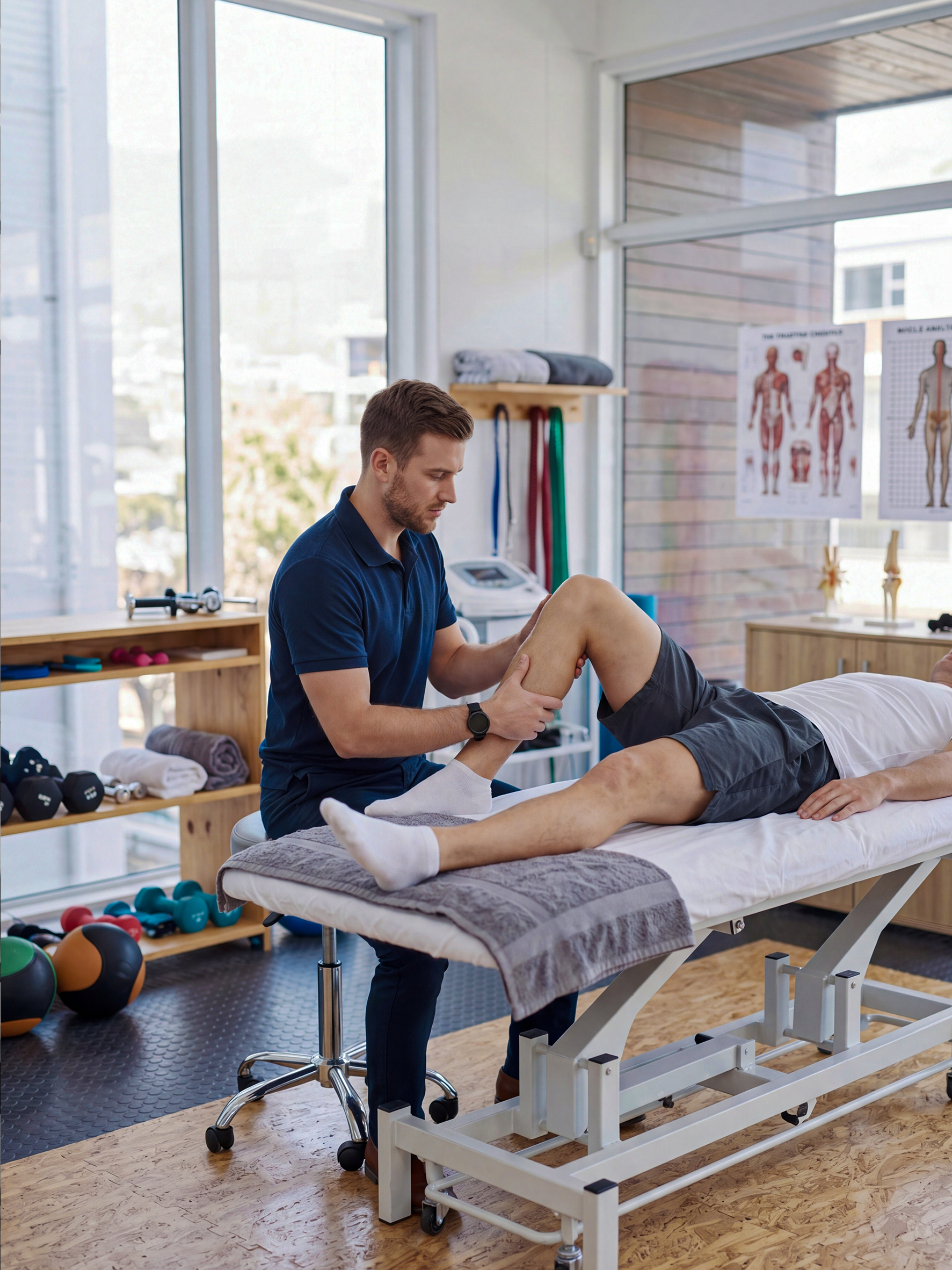


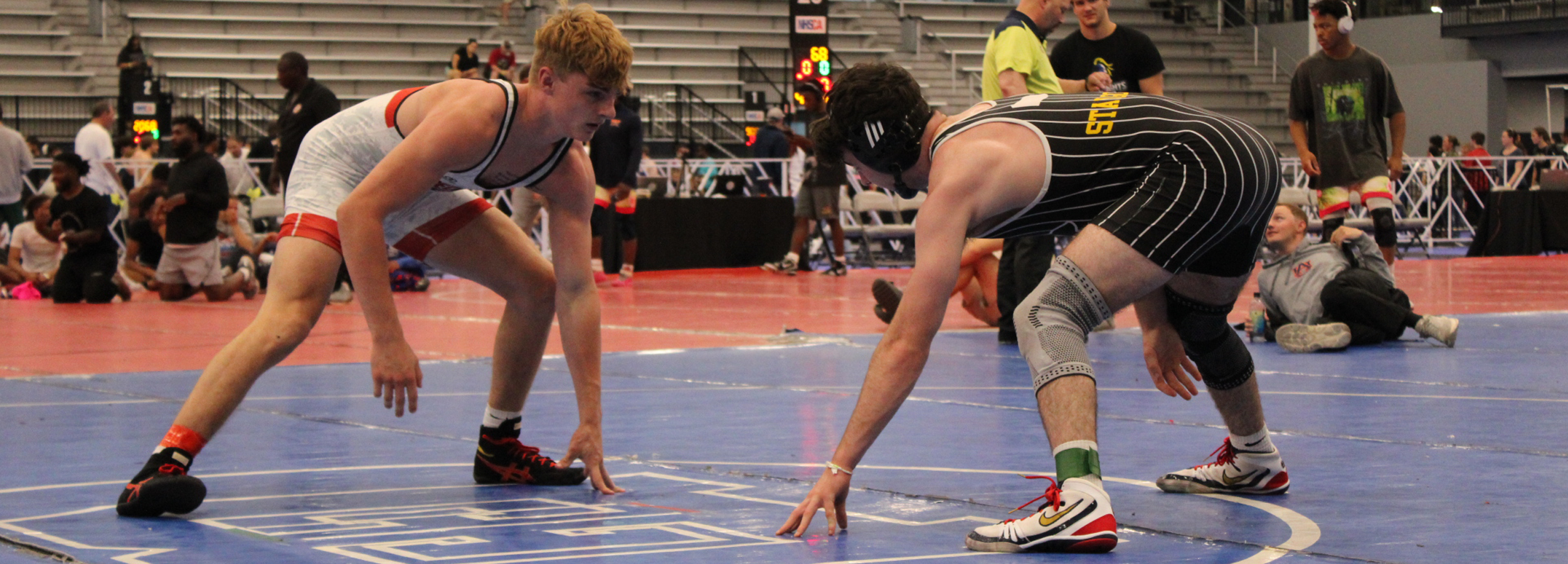
How to Protect Your Knees During Wrestling Season: A Practical Guide for Wrestlers
Wrestling is tough on the knees in ways that are easy to underestimate. There is the obvious contact: landing on the mat, defending a shot, sprawling, finishing a takedown, or getting folded during a scramble. But there is also the quieter stress that builds over a season: repeated level changes, penetration steps, pivots, hand-fighting, mat returns, and live rounds performed while tired.
Most wrestlers already know that knee health matters. The harder question is what actually helps during the season.
The answer is not one magic stretch, one drill, or one piece of gear. Protecting your knees during wrestling season comes down to a series of habits: warming up with purpose, maintaining strength, controlling knee position when tired, managing training volume, approaching weight management carefully, and using knee support only when it serves a clear purpose.
This article is for general educational purposes only and is not a substitute for medical advice, diagnosis, or treatment. Wrestlers with persistent knee pain, swelling, instability, locking, catching, or loss of motion should speak with a qualified healthcare professional, athletic trainer, or physical therapist.
Why Knee Protection Matters in Wrestling
The knee is one of the most commonly stressed areas in wrestling because the sport repeatedly places athletes in deep knee bend, rotation, contact, and single-leg positions. A wrestler may start a practice feeling sharp, but by the final live rounds, fatigue can make knee control harder to maintain.
Injury data from NCAA men’s collegiate wrestling shows how important this area is. A study covering the 2014–15 through 2018–19 seasons reported an overall injury rate of 8.82 injuries per 1,000 athlete-exposures, with the knee accounting for 21.4% of all reported injuries. Competition was especially demanding, but practice volume also matters because wrestlers spend far more total hours drilling and sparring than competing.
That is why knee protection should not begin five minutes before a match. It should be built into the way a wrestler trains all week.
Source: Epidemiology of Injuries in NCAA Men’s Wrestling, 2014–15 Through 2018–19
1. Start with a Warm-Up That Looks Like Wrestling
A few laps around the room may raise body temperature, but a good wrestling warm-up should also prepare the knees for the specific positions used on the mat. Wrestlers need to move through stance, level changes, single-leg balance, quick direction changes, hip rotation, mat transitions, and controlled contact.
Research on neuromuscular warm-up programs in sports suggests that routines combining strength, balance, mobility, and sport-specific movement can help reduce lower-extremity injury risk when performed consistently. Wrestling has not been studied as extensively as sports like soccer or basketball in this area, so the exact findings should not be applied directly. The core training principle still makes sense: prepare the body for the demands it is about to face.
A Simple 10-Minute Wrestling Knee Warm-Up
Minutes 1–2: Raise your body temperature.
Use light jogging, jump rope, stance-and-motion, or easy bike work. The goal is to feel warm, not tired.
Minutes 3–4: Open the ankles and hips.
Use ankle rocks, walking lunges, lateral lunges, and controlled hip rotations. Limited ankle or hip mobility can force the knee to absorb motion that should be shared by the entire lower body.
Minutes 5–6: Add single-leg control.
Use single-leg holds, controlled step-downs, or shallow single-leg squats. Keep the knee tracking in the same general direction as the toes instead of letting it collapse sharply inward.
Minutes 7–8: Rehearse level changes and penetration steps.
Start slowly. Focus on posture, foot placement, and bringing the hips with you rather than dropping all your weight directly onto the lead knee.
Minutes 9–10: Build toward live speed.
Finish with short stance-motion bursts, sprawls, re-shots, and controlled hand-fighting. Increase speed without turning the warm-up into the first live round of practice.
The American Academy of Orthopaedic Surgeons recommends at least five to ten minutes of low-impact activity before knee conditioning work. For wrestlers, the next step is making that preparation specific to mat movement.
Sources:
2. Keep Strength Training in the Program During the Season
Many wrestlers lift hard in the offseason and then almost abandon strength work once daily practices, dual meets, tournaments, school, and weight management take over. That is understandable, but it can leave the lower body less prepared for the demands of late-season wrestling.
The in-season goal is not to chase personal records or leave the weight room sore for practice. The goal is to maintain the strength and control that help the legs absorb force during shots, sprawls, mat returns, and scrambles.
The knee does not work alone. The quadriceps, hamstrings, glutes, hip abductors, hip adductors, calves, and trunk all help control leg position. Two short, well-planned strength sessions per week can be more useful than one exhausting session that interferes with wrestling practice.
| Exercise | Why It Helps Wrestlers | Suggested In-Season Volume |
|---|---|---|
| Split squat or reverse lunge | Builds single-leg strength in a wrestling-friendly stance | 2–3 sets of 5–8 reps per side |
| Single-leg Romanian deadlift | Trains hamstrings, glutes, and balance | 2–3 sets of 6–8 reps per side |
| Hamstring curl or slider curl | Helps maintain posterior-chain strength | 2–3 sets of 8–12 reps |
| Lateral step-down | Builds control when the knee is bent on one leg | 2–3 sets of 6–10 reps per side |
| Calf raise | Supports ankle stiffness and lower-leg control | 2–3 sets of 10–15 reps |
| Side plank or loaded carry | Improves trunk control during contact and finishes | 2–3 controlled sets |
The exact exercise selection matters less than the quality of the reps. Use loads you can control, avoid grinding sets, and place strength sessions where they will not compromise your hardest wrestling days.
3. Control Knee Position When You Are Tired
Most wrestlers can hit a clean shot early in practice. The problem often shows up after several hard rounds, when posture gets loose and the legs stop following the hips.
Fatigue can turn a good penetration step into a heavy drop onto the front knee. It can also lead to planted-foot twisting, inward knee collapse, or reaching for a finish while the hips remain too far behind.
Use these technical reminders during practice:
- Keep the foot, knee, and hip working together during level changes and finishes.
- Avoid forcefully twisting around a fixed, deeply bent knee.
- Bring your hips underneath you when finishing a shot instead of pulling only with the upper body.
- Practice attacks from both lead legs when possible.
- During scrambles, recognize when a position has stopped being productive and is becoming unsafe.
This is where coaching matters. A coach watching from the side can often see knee positions that a wrestler cannot feel in real time. Technique will not eliminate contact stress, but it can reduce avoidable stress repeated hundreds of times across a season.
4. Manage Training Volume Instead of Going Full Speed Every Day
Hard live wrestling is necessary. Hard live wrestling every day is not.
The knee has to tolerate both intensity and total volume. Problems often show up when a wrestler suddenly adds extra live rounds, tournament matches, conditioning sessions, and weight-cutting workouts at the same time.
A smarter training week includes different levels of stress:
- Hard live sessions
- Technical drilling
- Short situational rounds
- Strength maintenance
- Mobility and recovery work
- Appropriate rest between the hardest sessions
This does not mean avoiding hard training. It means making sure hard training has a purpose.
After practice, pay attention to how the knee responds, not only while you are warm, but later that evening and the next morning. Mild muscle soreness is different from joint swelling, loss of motion, or a knee that feels unstable. When symptoms keep increasing from one session to the next, adding more tape and hoping for the best is rarely a good plan.
5. Be Careful with Aggressive Weight Cutting
Weight management is part of wrestling, but rapid cutting can affect more than energy and performance. A 2023 study examining collegiate wrestlers found that for every 1% of body weight lost before competition, the hazard of injury during competition increased by approximately 11%.
That does not prove that every small change in weight directly causes an injury. Wrestlers cutting more weight may also be dealing with fatigue, lower energy availability, dehydration, and other factors. Still, the association is strong enough to take seriously.
Whenever possible:
- Make weight gradually rather than relying on a last-minute cut.
- Follow a plan developed with your coach, athletic trainer, or sports dietitian.
- Do not use extra conditioning as punishment for missing weight.
- Restore fluids and fuel after weigh-ins according to professional guidance.
- Speak up if dizziness, cramping, unusual weakness, or confusion develops.
A dehydrated and under-fueled wrestler may still be able to compete. That does not mean the athlete is moving, reacting, or controlling positions normally.
Source: Association of In-Competition Injury Risk and Weight Loss in Collegiate Wrestlers
6. Use Knee Support with a Clear Purpose
A wrestling knee sleeve or brace can be useful, but it should not be treated as armor. Depending on the design, knee support may provide compression, warmth, kneecap cushioning, flexible side support, or a more secure feel during movement.
A brace cannot correct poor technique, replace strength work, restore a serious ligament injury, or make an unstable knee safe for competition. It should be used as part of a broader routine that includes preparation, training, recovery, and professional evaluation when needed.
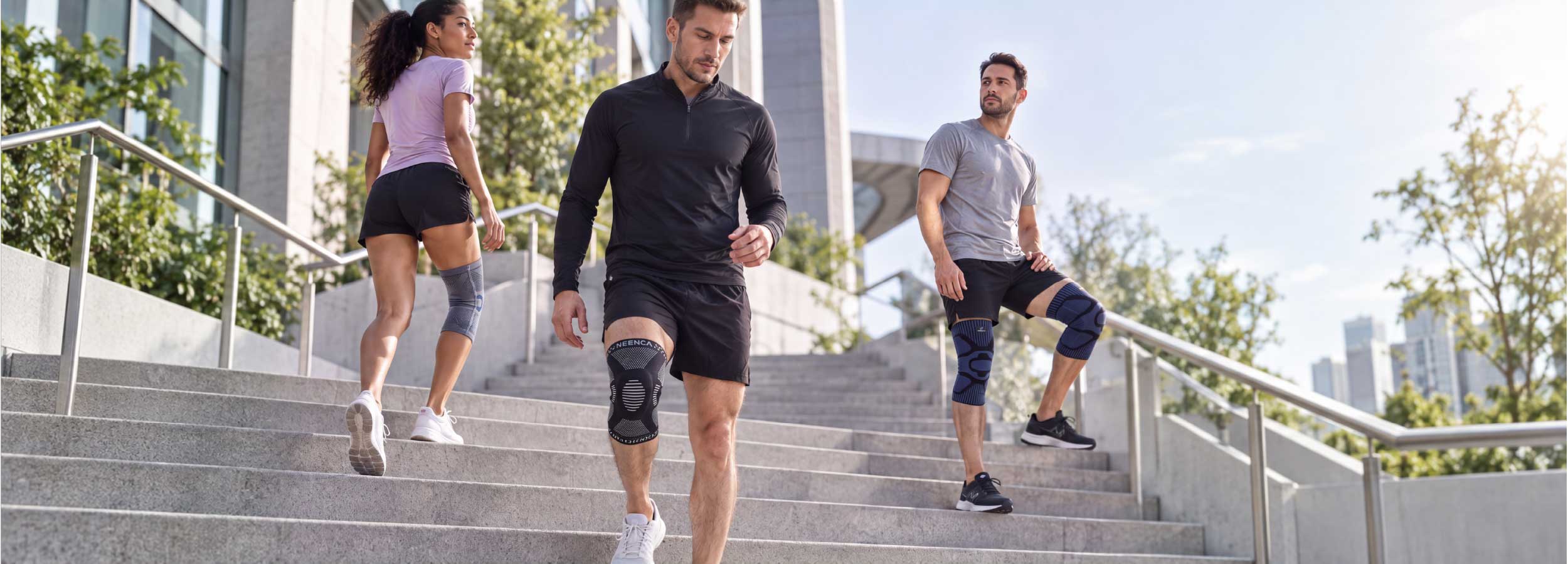
For wrestlers who want low-profile support without a bulky hinge, the NEENCA ACE-51 Professional Knee Brace is one option to consider. It features a knit compression design, patella gel support, breathable materials, and flexible side stabilizers for comfortable movement support.
You can also explore the full NEENCA Knee Braces & Sleeves collection or learn more about NEENCA’s support structure on the Our Technology page.
Before Wearing a Knee Brace in Competition
Before competing in any knee brace or sleeve:
- Wear it during practice first.
- Make sure it does not slide during shots and sprawls.
- Check that it does not bunch behind the knee.
- Make sure it does not restrict normal wrestling movement.
- Confirm with your coach and event officials that it is allowed.
Rules and interpretations can vary by organization, event, and state association. Always confirm equipment requirements before competition rather than discovering an issue at mat-side.
7. Know When Knee Symptoms Need Attention
Wrestlers are used to discomfort. That toughness is part of the culture, but it can also make athletes ignore symptoms that deserve attention.
A knee should be evaluated by an athletic trainer or medical professional if there is:
- Rapid or significant swelling
- A pop followed by pain or instability
- Difficulty bearing weight
- Loss of normal knee movement
- Repeated locking or catching
- A feeling that the knee is giving way
- Pain that continues to worsen instead of settling
The American Academy of Orthopaedic Surgeons lists pain, swelling, catching, locking, and instability among common signs of knee injury. It also recommends prompt care when an athlete experiences severe pain, cannot move the knee, begins limping, or feels the knee give out after a pop.
A brace may make the knee feel more supported, but it should not be used to hide these symptoms from a coach, parent, athletic trainer, or healthcare professional.
Source: Common Knee Injuries — American Academy of Orthopaedic Surgeons
8. Build Recovery into the Wrestling Week
Recovery does not mean doing nothing. For wrestlers, recovery means giving the body enough support to adapt to hard practices and competition.
Simple recovery habits include:
- Cooling down after intense practice
- Maintaining hip, ankle, and hamstring mobility
- Sleeping enough during the week
- Eating enough to support training demands
- Managing swelling or unusual soreness early
- Communicating with coaches when symptoms change
The best knee-protection routine is usually not dramatic. It is the routine you repeat consistently before anything starts to feel wrong.
A Smarter Way to Protect Your Knees During Wrestling Season
Protecting your knees during wrestling season is not about avoiding every hard position. Wrestling is a contact sport, and athletes must prepare for intensity. The goal is to make sure the stress you take on the mat is stress your body is prepared to handle.
Warm up with purpose. Maintain strength. Keep your technique organized when you are tired. Manage workload carefully. Approach weight management responsibly. Use knee support when it has a clear role, not as a substitute for care.
When these habits become part of the season, wrestlers give themselves a better foundation for staying active, competing with confidence, and reducing unnecessary knee stress.
Frequently Asked Questions
Are knee injuries common in wrestling?
Yes. The knee is one of the most commonly injured areas in wrestling. NCAA injury surveillance data from the 2014–15 through 2018–19 seasons found that knee injuries accounted for 21.4% of reported injuries in men’s collegiate wrestling.
Should wrestlers wear knee pads or knee braces?
It depends on the wrestler’s needs. Knee pads mainly provide cushioning during mat contact. Compression sleeves may provide warmth, light support, and a secure feel. More structured braces are generally used when an athlete needs additional support, often with guidance from an athletic trainer or healthcare professional.
What exercises help support wrestlers’ knees?
Exercises that strengthen the quadriceps, hamstrings, glutes, calves, hips, and core can help wrestlers control leg position during shots, sprawls, and scrambles. Useful options include split squats, reverse lunges, single-leg Romanian deadlifts, hamstring curls, lateral step-downs, calf raises, and single-leg balance work.
Can you wrestle with mild knee discomfort?
Not every ache requires an athlete to stop wrestling, but knee discomfort should not be ignored if it worsens, changes movement, or comes with swelling, locking, catching, or instability. Wrestlers should speak with a coach, athletic trainer, or healthcare professional when symptoms do not settle.
How tight should a wrestling knee sleeve be?
A wrestling knee sleeve should feel secure without causing numbness, tingling, discoloration, or restricted movement. It should stay in place during level changes, penetration steps, and sprawls without bunching behind the knee.
What should wrestlers look for in knee support?
For regular training, many wrestlers prefer a low-profile design that fits close to the leg and does not interfere with stance, shots, or mat movement. Useful features may include breathable materials, a secure fit, flexible side support, patella cushioning, and enough mobility for deep knee flexion.
Can a knee brace prevent wrestling injuries?
No knee brace can guarantee injury prevention. A brace may provide additional support, compression, or cushioning, but it should be combined with proper warm-ups, strength training, technique, workload management, and professional evaluation when needed.
When should a wrestler see a medical professional for knee symptoms?
A wrestler should seek professional evaluation if there is significant swelling, a pop followed by pain or instability, difficulty bearing weight, repeated locking or catching, loss of motion, or a knee that feels like it is giving way.
Explore Related NEENCA Resources

De Wilson John



Dejar un comentario
Este sitio está protegido por hCaptcha y se aplican la Política de privacidad de hCaptcha y los Términos del servicio.