




Статья: Back and Knee Support for People Who Stand All Day
Back and Knee Support for People Who Stand All Day
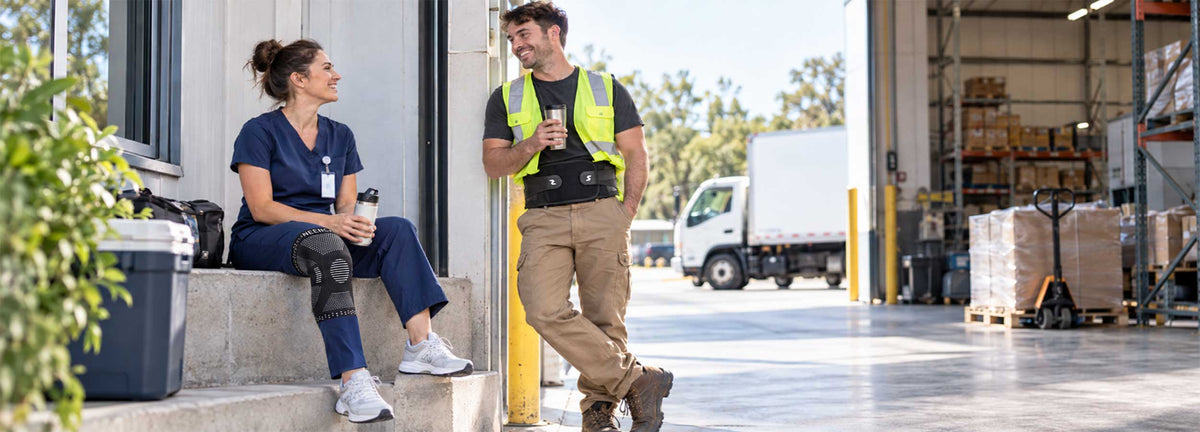
Standing all day is rarely just a knee problem or just a back problem. For nurses, warehouse workers, retail staff, teachers, food service teams, warehouse pickers, tradespeople, and anyone who spends long hours on hard floors, the whole body has to manage repeated load from the feet up.
Your knees help absorb and control movement. Your hips and core help keep you upright. Your lower back works in the background as you stand, turn, lift, bend, reach, walk, and shift weight from one leg to the other. When one area feels tired or unsupported, the rest of the body often has to compensate.
That is why back and knee support for people who stand all day should be chosen as part of a complete workday strategy — not as a quick fix or a promise that one product can solve everything. The right support should feel practical, wearable, and appropriate for the way you actually move through your day.
This article is for general educational purposes only and is not a substitute for professional medical advice, diagnosis, or treatment. If you have sharp pain, swelling, instability, numbness, tingling, radiating pain, recent injury, post-surgery restrictions, difficulty bearing weight, or symptoms that worsen during work, consult a qualified healthcare professional.
Why Long Standing Days Affect Both the Knees and the Back
Standing work is not the same as simply standing still. Most long-shift jobs involve a mix of standing, walking, bending, carrying, reaching, turning, squatting, climbing steps, pushing carts, or working at counters. Even when the task looks repetitive, the body is constantly making small adjustments.
Over a long day, several factors can make the knees and lower back feel more noticeable:
- Hard floors: Concrete, tile, warehouse flooring, and hospital corridors can feel unforgiving after hours on your feet.
- Repetitive weight shifts: Standing workers often shift from one leg to the other without realizing how often it happens.
- Forward reaching: Counters, carts, shelves, beds, and workstations can pull the body slightly forward for long periods.
- Frequent bending: Picking, stocking, cleaning, helping patients, or lifting supplies can add stress to both knees and back.
- Stairs and ramps: Daily steps can feel very different after fatigue sets in.
- Footwear and floor setup: Shoes, insoles, anti-fatigue mats, and workstation height can all change how the body feels by the end of the day.
For this reason, a knee brace or back brace should not be treated as the whole solution. It is one layer in a workday system that also includes shoes, pacing, task rotation, lifting habits, breaks, floor surfaces, and fit.
Evidence Boundary: What Support Products Can and Cannot Promise
Research on prolonged standing, knee support, knee sleeves, lumbar supports, workplace interventions, and musculoskeletal symptoms is useful, but it has limits. Studies often focus on specific groups, specific brace designs, controlled walking tests, knee osteoarthritis populations, or workplace interventions that do not perfectly match everyday consumer use.
Some knee brace and knee sleeve research suggests that soft knee support may influence walking confidence, perceived instability, gait measures, or comfort in certain groups. That does not mean every person who stands all day needs a knee brace, or that a brace will prevent workplace problems.
Back support evidence also needs careful wording. Lumbar braces and back belts may help some users feel more supported during selected tasks, but technical guidelines and systematic reviews have not found consistent evidence that back belts, lumbar supports, or braces should be used as primary prevention for occupational low back pain. A lower back brace should be positioned as supportive equipment, not a guarantee against pain, injury, or time away from work.
In practical terms, this article uses research to explain why standing work can challenge the knees and back, why support features may matter, and how to choose products more thoughtfully. It does not claim that any brace treats a condition, prevents injury, or replaces professional care.
Start With the Workday, Not the Product
Before choosing a knee brace, back brace, or both, look at your actual day. The best support for a retail worker who mostly stands at a counter may not be the same as the best support for a warehouse worker who lifts, walks, turns, and climbs steps.
Ask yourself:
- Do I mostly stand in one place, or do I walk throughout the shift?
- Do I bend, squat, lift, or reach forward often?
- Do stairs, ramps, carts, ladders, or uneven surfaces show up in my day?
- Do I want a light support feel, firmer compression, or more structure?
- Do I need support that can be worn under work clothes?
- Will I be wearing it for a full shift or only during certain tasks?
If you are still unsure which support direction fits your routine, the NEENCA Knee Brace Finder can help you compare support needs before choosing a product.
When Knee Support Makes Sense During Standing Work
Knee support may make sense when your workday includes repeated walking, stairs, long periods on hard floors, or tasks where you want the knee to feel more supported and secure.
For long standing days, knee support should focus on:
- Comfortable compression: A snug feel that does not become distracting during long wear.
- Patella-area support: A contoured pad or open-patella design that sits correctly around the kneecap area.
- Side support: Flexible stabilizers or hinges for users who want more structure than simple compression.
- Anti-slip fit: A design that stays centered after walking, sweating, bending, or climbing steps.
- Breathability: Materials that feel wearable through warm workplaces or long shifts.
- Natural movement: Support that does not make walking, sitting, standing, or stepping feel awkward.
If your main concern is choosing knee support for long standing days, you may also want to read Best Knee Support for Standing All Day.
When Back Support Makes Sense During Standing Work
Lower back support may make sense when your day includes long standing, repeated bending, carrying, pushing, pulling, or periods where you want a more supported feel around the lower back and waist.
A practical back support should not feel like a rigid shell for normal daily movement. For workdays, look for support that can be adjusted to match what you are doing. You may want a firmer wrap during physical tasks and a more relaxed fit during breaks or seated periods.
Good back support features include:
- Broad lumbar coverage: Enough rear-panel support to feel stable across the lower back.
- Adjustable compression: The ability to fine-tune tension instead of relying on one fixed fit.
- Flexible reinforcement: Structure that supports posture awareness without acting like an immobilizer.
- Breathable materials: Important for long shifts, uniforms, and active work.
- Task compatibility: Support that works with standing, walking, bending, and controlled lifting tasks.
The NEENCA HY006 Lower Back Brace with Lumbar Support is designed as a more structured everyday lower-back support option with pulley-assisted tension adjustment, a broad lumbar support area, internal stabilizers, flexible spring stays, and breathable knit and mesh sections.
To compare additional lumbar support options, browse the NEENCA Back Braces Collection.
Should You Use Knee Support, Back Support, or Both?
The answer depends on what part of the workday feels most demanding. You do not need to wear every support product at once. In many cases, it is better to identify the movement pattern first, then choose the support layer that matches it.
| Workday Pattern | Support Direction | Why It May Fit |
|---|---|---|
| Mostly standing and walking on hard floors | Knee support or light compression support | Helps create a more supported feel around the knee during long periods on your feet |
| Repeated stairs, bending, turning, or active movement | Knee support with side stabilizers or adjustable structure | May feel more secure than simple compression during repeated movement |
| Frequent reaching, carrying, controlled lifting, or lower-back fatigue | Lower back support | Can add a wrapped-in support feel around the lumbar area during selected tasks |
| Mixed workdays with walking, standing, bending, and carrying | Knee support and lower back support used strategically | Some users may use different support products for different parts of the day instead of wearing everything all the time |
What to Look for in Knee Support for Standing All Day
1. A Fit That Stays Centered
The brace should stay centered around the kneecap area. If it slides down, twists, or bunches behind the knee, it may not be the right size or support level for your workday.
2. Comfortable Compression, Not Maximum Tightness
A knee brace should feel snug and supportive, not painful. Numbness, tingling, coldness, discoloration, or deep pressure marks are signs that the brace may be too tight or incorrectly fitted.
3. Patella Support That Aligns With the Knee
A contoured patella gel pad or open-patella cushion should sit around the kneecap area. If the pad is clearly too high or too low, the brace may feel unnatural during walking, stairs, or sitting down.
4. Side Support That Matches Your Movement
Flexible side stabilizers may be enough for many users who want more than basic compression. Adjustable hinged support may make sense when you want firmer side structure and strap-based fit control.
5. Breathability for Long Wear
Standing shifts can be warm, especially under uniforms or work pants. Breathable knit and soft edges matter if you plan to wear support for long periods.
What to Look for in Back Support for Standing All Day
1. Adjustable Tension
Back support should be adjustable because a full shift rarely feels the same from start to finish. You may want a firmer wrap while moving supplies and a lighter feel when standing at a counter.
2. Broad Lower-Back Coverage
For standing work, a back brace should support the lower-back area without feeling like it blocks normal movement. Broad coverage can feel more stable than a narrow elastic belt.
3. Flexible Structure
Look for structure that supports the lower back while still allowing normal walking, sitting, and bending. A brace that feels too rigid may be hard to wear through a real workday.
4. Clothing Compatibility
If you wear uniforms, scrubs, aprons, or work pants, check whether the brace fits comfortably under or over your clothing. The best product on paper is not useful if it constantly shifts or interferes with your work gear.
NEENCA Support Options to Compare
For long standing days, the best option depends on whether your priority is knee support, back support, or a more structured support feel.
| Support Need | NEENCA Option | Best Fit |
|---|---|---|
| Secure compression-based knee support | ACE-51 | Users who want a thicker, more secure compression feel with patella support and flexible side stabilizers for long standing, walking, stairs, and active daily movement |
| More adjustable knee support | HX042/HX035 | Users who want removable side hinges, front-crossing X-straps, and a firmer adjustable wrap than a basic sleeve-style option |
| Adjustable lower-back support | HY006 | Users who want broad lumbar coverage, pulley-assisted tension adjustment, flexible stays, and a firm but adjustable wearing feel for everyday lower-back support |
Choose NEENCA ACE-51 Professional Knee Brace if your standing day includes walking, stairs, active movement, and you want thicker, more secure compression with a comfort-focused material feel.
Choose NEENCA HX042/HX035 Hinged Knee Support if you want more structure than a flexible-stabilizer sleeve. Its removable side hinges add structure along both sides of the knee, while the front-crossing X-straps let you fine-tune the wrap around the upper and lower leg.
Choose NEENCA Back Braces if you want adjustable lower-back support for standing work, walking, driving, controlled lifting tasks, and everyday movement. Its pulley-assisted adjustment helps fine-tune tension after the main belt is secured.
Fit Checks Before a Full Shift
Do not test a new brace for the first time during the hardest part of your workday. Test it during a shorter, controlled period first.
For knee support, check that:
- The patella support is centered around the kneecap area
- The brace stays in place when walking, bending, and using stairs
- The top and bottom edges do not roll
- The brace does not bunch behind the knee
- You do not feel numbness, tingling, coldness, or unusual pressure
For back support, check that:
- The brace sits securely around the lower back and waist
- You can breathe normally
- You can walk, sit, bend, and work without feeling locked in place
- The adjustment system does not dig into your skin
- You can loosen or remove the brace if discomfort increases
For knee braces, use the NEENCA Find Your Size guide and follow the product-specific measurement instructions. For back braces, measure exactly as instructed on the product page rather than choosing by pants size alone.
Workday Habits That Still Matter
Support products work better when the rest of your workday setup makes sense. A brace should not be the only strategy.
Choose Shoes That Match the Floor
Footwear matters. Hard floors, slick surfaces, and long shifts can make poor shoes feel worse over time. Look for shoes that fit your workplace requirements and provide reliable grip and comfort.
Use Anti-Fatigue Mats When Appropriate
For stationary standing work, anti-fatigue mats may help reduce the heavy, tired feeling that builds during long periods on hard floors. They are most useful when matched with the task and kept in good condition.
Change Position When You Can
Small position changes can matter over a long shift. Alternating tasks, shifting stance, using a footrest when appropriate, and taking short movement breaks can reduce the feeling of being locked into one posture.
Keep Loads Close
If you carry or lift items, keep them close to your body when possible. Reaching away from the body can make both the knees and lower back work harder.
Do Not Ignore Fatigue
Fatigue changes how people move. Stairs, turning, bending, and lifting can all feel different at the end of a long day. Slow down when needed and ask for help with tasks that exceed your current capacity.
When Support Is Not Enough
Back and knee support should never be used to push through warning signs. Stop the activity and seek qualified guidance if you notice:
- Sharp knee or back pain
- Swelling around the knee
- A knee that gives way
- Locking, catching, or inability to move normally
- Numbness, tingling, or radiating symptoms
- Difficulty bearing weight
- Pain after a fall, twist, or direct impact
- Symptoms that worsen as the shift continues
If symptoms are related to a workplace task, report the issue according to your workplace process and seek appropriate professional guidance.
Final Thoughts
People who stand all day often need more than a single-product answer. Knee support can help create a more secure feel during walking, stairs, and repeated bending. Back support can add a wrapped-in, adjustable support feel around the lower back during selected tasks. But both should be used as part of a broader strategy that includes footwear, floor setup, task variation, pacing, and safe movement habits.
For knee support, ACE-51 may fit users who want secure compression and flexible side stabilizers, while HX042/HX035 may fit users who want firmer side structure and adjustable X-straps. For lower-back support, HY006 may fit users who want broad lumbar coverage and pulley-assisted tension control.
The best choice depends on your workday pattern, fit, comfort, support preference, and whether you can move naturally while wearing the support.
Frequently Asked Questions
Should I wear a knee brace if I stand all day?
Some people use knee support for compression, comfort, and a more secure feel during long standing or walking days. Whether it makes sense depends on your work tasks, fit, comfort, and whether the brace allows natural movement.
Should I wear a back brace for long standing shifts?
A back brace may help some users feel more supported during selected tasks, but it should not be treated as a guarantee against low-back problems. It works best when paired with good footwear, task variation, pacing, and safe movement habits.
Can I wear knee support and back support at the same time?
Some users may wear both during demanding parts of the day, but more support is not always better. Start with the area that needs the most support, test the fit, and avoid wearing anything that restricts normal movement or breathing.
What knee brace is best for standing and walking at work?
Look for a brace that stays centered, supports the kneecap area, provides the right amount of side support, and does not slide during walking, stairs, or bending. The best choice depends on whether you prefer compression-based support or more adjustable hinged support.
What is the difference between ACE-51 and HX042/HX035 for workdays?
ACE-51 is a compression-based knee brace with patella support and flexible side stabilizers. HX042/HX035 is a hinged support option with removable side hinges and front-crossing X-straps for a firmer, more adjustable wrap.
When should I stop relying on a brace and get checked?
Seek qualified guidance if you have sharp pain, swelling, instability, numbness, tingling, radiating symptoms, difficulty bearing weight, or symptoms that worsen during work.
References
- Waters TR, Dick RB. Evidence of Health Risks Associated with Prolonged Standing at Work and Intervention Effectiveness. Rehabilitation Nursing. 2015.
https://pmc.ncbi.nlm.nih.gov/articles/PMC4591921/ - Coenen P, Parry S, Willenberg L, Shi JW, Romero L, Blackwood DM, Healy GN, Dunstan DW, Straker LM. Associations of Prolonged Standing with Musculoskeletal Symptoms: A Systematic Review of Laboratory Studies. Gait & Posture. 2017.
https://pubmed.ncbi.nlm.nih.gov/28863296/ - Baker R, Coenen P, Howie E, et al. Distinctive Characteristics of Prolonged Standing Low Back Pain Developers' and the Associated Risk Factors: Systematic Review and Meta-Analysis. Scientific Reports. 2023.
https://pmc.ncbi.nlm.nih.gov/articles/PMC10115839/ - Cudejko T, van der Esch M, van der Leeden M, et al. The Immediate Effect of a Soft Knee Brace on Pain, Activity Limitations, Self-Reported Knee Instability, and Self-Reported Knee Confidence in Patients with Knee Osteoarthritis. Arthritis Research & Therapy. 2017.
https://pmc.ncbi.nlm.nih.gov/articles/PMC5709997/ - Inai T, Kudo S, Tsuchida W, Fujimoto M. Knee Sleeves Improve Gait Symmetry During Fast Walking in Older Adults. Frontiers in Bioengineering and Biotechnology. 2024.
https://pmc.ncbi.nlm.nih.gov/articles/PMC11288883/ - Myung E, Domingos Neto J, Murta GA, Vieira A, Gomes de Lima PR, Lessa L, Bernardo WM. ANAMT Technical Guideline (DT 05): Prevention of Occupational Low Back Pain Through Back Belts, Lumbar Support or Braces. Revista Brasileira de Medicina do Trabalho. 2020.
https://pubmed.ncbi.nlm.nih.gov/32754669/ - Canadian Centre for Occupational Health and Safety. Working in a Standing Position - Basic Information. CCOHS.
https://www.ccohs.ca/oshanswers/ergonomics/standing/standing_basic.html

Оставить комментарий
Этот веб-сайт защищается hCaptcha. Применяются Политика конфиденциальности и Условия использования hCaptcha.