




Articolo: How Tight Should a Knee Brace Be?
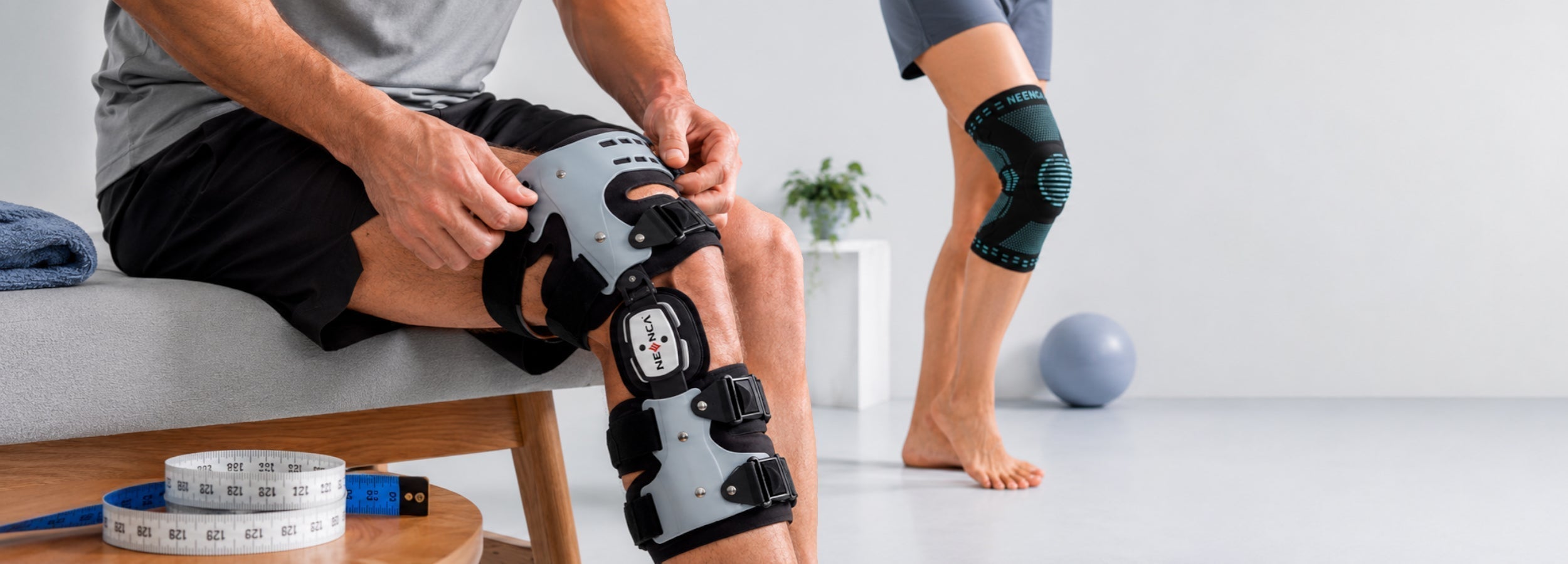
How Tight Should a Knee Brace Be?
A knee brace should feel snug, secure, and supportive without feeling painful or restrictive. It should stay in place as you walk, sit, stand, and bend your knee, but it should not cause numbness, tingling, coldness, skin discoloration, or sharp pressure.
In simple terms, a knee brace should support your movement—not make your leg feel trapped.
Cleveland Clinic similarly advises that a knee brace should be snug and secure without hurting or feeling as though it is cutting off circulation.
Getting the fit right affects both comfort and performance. A brace that is too loose may slide, twist, or fail to keep its support features in the correct position. One that is too tight may dig into the skin, restrict comfortable movement, or create excessive pressure.
This guide explains how to tell whether your knee brace fits correctly, why braces sometimes slide down, how to measure for the right size, and what to consider when you fall between two sizes.
The Quick Fit Check
Once the brace is on, walk around, sit down, stand up, and gently bend your knee several times.
A well-fitting knee brace should:
- Feel evenly snug around the knee
- Stay centered during normal movement
- Allow you to bend and straighten your knee comfortably
- Keep any kneecap pad, opening, side stabilizer, or hinge correctly positioned
- Lie relatively smooth without excessive folding or bunching
- Avoid digging into the back of the knee
- Feel supportive without causing pain or changes in sensation
Some light, temporary impressions on the skin can occur with compression products. Deep marks that remain for a long time, painful pressure, numbness, or discoloration are different and may indicate that the brace is too tight.
Signs Your Knee Brace Is Too Tight
More compression does not automatically mean more support. A brace that feels firm at first may become uncomfortable once you begin moving or wearing it for a longer period.
Your knee brace may be too tight if you notice:
- Numbness or tingling around or below the brace
- A cold feeling in the lower leg or foot
- Changes in skin color
- Sharp pressure, pinching, or burning
- Pain that becomes worse while wearing the brace
- Swelling below the edge of the brace
- Deep pressure marks that remain after removal
- Difficulty bending or straightening the knee comfortably
- Material or straps cutting into the back of the knee
Remove or loosen the brace if your foot becomes numb, cold, discolored, or unusually painful. Changes in temperature, color, or sensation can be warning signs that the brace is applying too much pressure.
Do not try to solve slipping by tightening every strap as much as possible. A brace that continues to move may be the wrong size, positioned incorrectly, or simply not the right design for your leg shape or activity.
Signs Your Knee Brace Is Too Loose
A loose brace may feel comfortable, but it cannot work as intended if its support features do not stay in position.
Your brace may be too loose if:
- It slides down after a few minutes of walking
- It twists around your leg
- You need to pull it back up repeatedly
- The kneecap pad or opening moves away from the center of your knee
- Side stabilizers or hinges shift forward or backward
- The material wrinkles or bunches behind the knee
- There are noticeable gaps between the brace and your leg
- Adjustable straps reach their limit before the brace feels secure
- You feel little or no support during movement
Before changing sizes, remove the brace and put it on again carefully. Incorrect positioning can make a correctly sized brace feel loose.
If it still slides after you have checked the placement and adjusted the straps evenly, compare your measurements with the product-specific size chart.
Why Does My Knee Brace Keep Sliding Down?
Slipping is one of the most common knee-brace fit problems. It does not necessarily mean that the brace is poorly made.
Common causes include:
- The brace is too large: Even a small difference in thigh or calf circumference can affect how securely a sleeve stays in place.
- The brace is positioned incorrectly: Patella pads, kneecap openings, side stabilizers, and hinges must line up with the correct areas of the knee. If they start in the wrong position, the brace may shift as soon as you move.
- The straps are uneven: Over-tightening one strap while leaving another loose can pull the brace out of alignment.
- Moisture reduces grip: Sweat, lotion, body oil, or damp skin can make some braces more likely to move.
- The brace is worn over slippery clothing: Smooth leggings or loose pants can reduce friction and allow the brace to slide. Compression sleeves generally fit more securely against clean, dry skin.
- Your leg shape affects the fit: Thigh-to-calf proportions vary. A brace that fits well around the knee may still be too loose above or below it.
- The elastic has stretched over time: Repeated wear and washing can gradually reduce the tension of elastic materials.
- The brace style does not match the activity: A lightweight sleeve may work well for walking or everyday movement but may not stay as secure during activities involving frequent direction changes or repeated bending.
How to Keep a Knee Brace From Slipping
Try these adjustments before changing products:
- Recheck your measurements. Do not choose a brace based only on height, weight, pants size, or the size you wear in another brand.
- Start with clean, dry skin. Avoid applying lotion immediately before putting on the brace.
- Position the support area first. Center the kneecap pad or opening before adjusting the rest of the brace.
- Smooth the material. Remove folds and wrinkles rather than tightening over them.
- Adjust straps evenly. Secure each area gradually instead of pulling one strap as tight as possible.
- Test the brace while standing and moving. A brace can feel secure while seated but shift once you begin walking.
- Consider another brace style. A brace with adjustable straps or additional stabilizing features may stay more secure than a basic sleeve for some body shapes and activities.
If you want to compare flexible sleeves, stabilized braces, and higher-stability options before choosing, read Knee Sleeve vs Knee Brace: What’s the Difference?.
How to Measure for a Knee Brace Correctly
Measuring correctly is the most important step in choosing the right size. Do not choose your knee brace size based only on height, weight, pants size, or your size in another brand. Different brace models may use different measurement points.
For many knee braces and sleeves, you may need one or more of these measurements:
- Thigh circumference above the knee
- Knee circumference around the kneecap
- Calf circumference below the knee
Always follow the size chart for the specific product you are buying. For NEENCA products, start with the NEENCA Find Your Size guide and then check the individual product page.
General Measuring Tips
- Use a soft measuring tape.
- Measure directly around the leg, not over thick clothing.
- Keep the tape flat against the skin.
- Do not pull the tape so tight that it compresses the leg.
- Stand naturally unless the product instructions say otherwise.
- Measure the exact location listed on the size chart.
- If your leg is swollen, measure at the time of day you plan to wear the brace most often.
- Compare your measurement with the product-specific size chart before ordering.
What If You Are Between Two Sizes?
Being between sizes is common. The right decision depends on the product type, activity, body shape, and how much compression you prefer.
When to Consider the Smaller Size
You may consider the smaller size if:
- Your measurement is only slightly above the lower size range
- You prefer a firmer compression feel
- You are choosing a stretchy compression sleeve
- You mainly need the brace for active movement where slipping is a concern
However, do not size down if you are sensitive to compression, have swelling, or have circulation concerns.
When to Consider the Larger Size
You may consider the larger size if:
- You prefer a more comfortable daily-wear fit
- You plan to wear the brace for longer periods
- Your knee or leg size changes during the day
- You are sensitive to pressure
- You are choosing a brace with adjustable straps that can be tightened
When to Ask a Professional
If you are choosing a hinged, rigid, or unloader brace, have significant symptoms, or need support for an injury history, professional fitting guidance may be safer than guessing between sizes.
This is especially true for structured products such as the NEENCA OA Unloader Knee Brace 052, where alignment and side-specific support matter more than simple compression fit.
How to Put On a Knee Brace for the Best Fit
Even the correct size can feel wrong if the brace is worn incorrectly. Use these general steps unless your product instructions say otherwise.
- Start with clean, dry skin. Sweat, lotion, or slippery fabric can make a brace slide.
- Position the brace correctly. Align the kneecap opening, patella pad, or support area with your knee.
- Smooth the fabric. Remove wrinkles or folds before tightening.
- Adjust from bottom to top if straps are included. Make the brace secure without over-tightening one area.
- Stand and test movement. Walk a few steps, bend your knee, and check comfort.
- Re-adjust after a few minutes. Some braces settle slightly once you start moving.
A good test is simple: after putting it on, walk, sit, stand, and bend the knee gently. The brace should stay centered and supportive without digging into the skin.
How Fit Changes by Knee-Brace Type
Different support designs should not all feel the same.
Compression sleeves
A compression sleeve should feel evenly snug around the knee. It should stay smooth against the leg without rolling heavily at the edges or collecting behind the knee.
A flexible sleeve such as the NEENCA ACE-50 may suit users looking for a lower-profile feel during walking, work, training, and everyday movement.
Knee braces with side stabilizers
These braces should keep the patella support area centered while the flexible side components remain aligned along the sides of the knee.
The NEENCA ACE-51 combines a compression knit structure with targeted kneecap cushioning and flexible side stabilizers. It should feel more substantial than a lightweight sleeve while still allowing comfortable everyday movement.
Adjustable and hinged knee braces
An adjustable brace should feel secure without requiring every strap to be pulled to its limit.
For a hinged brace, the side hinges should remain aligned near the knee joint rather than shifting forward or backward as you move. Hinged, unloader, post-operative, or range-of-motion braces may have model-specific fitting and wearing instructions that take priority over general advice.
Should You Wear a Knee Brace Over or Under Clothing?
Many compression sleeves work best directly against clean, dry skin. This helps the brace maintain contact with the leg and reduces movement caused by loose or slippery fabric.
Some adjustable or structured braces may be worn over a thin, close-fitting layer when permitted by the product instructions.
General guidance:
- Avoid wearing compression sleeves over thick pants
- Avoid loose fabric that can fold under the brace
- Avoid slippery material that allows the brace to move
- Keep the fabric smooth if wearing a thin layer underneath
- Follow the instructions for the specific brace
If the brace causes persistent rubbing or skin irritation, remove it and check the size, placement, material, and length of wear.
How Long Should You Test the Fit?
Do not make your first test a full work shift, long walk, or intense training session.
Start with a short at-home fit check:
- Put the brace on according to the product instructions.
- Walk around the room.
- Sit down and stand up several times.
- Gently bend and straighten the knee.
- Check whether the brace slides, rolls, pinches, or bunches.
- Remove it and inspect your skin.
A slight settling of the fabric can be normal. Repeated sliding, painful pressure, or a support pad that moves away from the kneecap usually means the fit needs to be adjusted.
For broader wear-time guidance, read How Long Should I Wear a Knee Brace? on the NEENCA blog.
Fit Checklist Before You Keep or Return a Knee Brace
Before deciding that a brace does not work, check these points. This can help reduce unnecessary returns and exchanges caused by simple sizing or placement issues.
| Problem | Possible Cause | What to Try |
|---|---|---|
| Brace slides down | Too large, wrong placement, sweat, wrong support type | Re-measure, reposition, wear on dry skin, consider more structured support |
| Brace feels painfully tight | Too small, straps too tight, swelling, wrong size range | Loosen, remove, check circulation, consider larger size |
| Brace bunches behind knee | Wrong placement, too much fabric, size mismatch | Reposition, smooth fabric, check size chart |
| Patella opening does not stay centered | Incorrect size or placement | Center before tightening, adjust straps evenly, re-measure |
| Straps reach the end | Possibly wrong size | Compare measurement with size chart; consider different size |
| Skin irritation | Friction, sweat, long wear, material sensitivity | Shorter wear test, clean/dry skin, stop use if irritation continues |
When to Choose a Different Type of Knee Support
Sometimes the problem is not only the size. It may be the product type.
Consider a different type of knee support if:
- A simple sleeve keeps sliding during active work or sports.
- You want more support around the kneecap area.
- You need side stabilizers for a more secure feel.
- A bulky structured brace feels unnecessary for daily walking.
- You want highly structured support and a standard brace does not feel stable enough.
You can compare different support levels in the NEENCA Knee Braces Collection.
When to Stop Wearing the Brace and Get Advice
Stop wearing the brace and seek medical guidance if you notice:
- Numbness, tingling, or coldness that does not quickly improve after removal
- Skin color changes
- Severe or worsening pain
- New or increasing swelling
- Skin wounds, blisters, or persistent irritation
- Difficulty bearing weight
- A knee that gives way, locks, or catches
- Symptoms after a fall, twist, or recent injury
A brace should support movement. It should not hide symptoms that need professional evaluation.
Final Takeaway
A knee brace should feel secure, not restrictive.
It should stay centered as you move, allow comfortable bending and straightening, and provide an even supportive feel. If it repeatedly slips, check the measurement, positioning, strap adjustment, skin conditions, and brace style. If it causes numbness, discoloration, worsening pain, or other concerning symptoms, remove it and seek professional guidance.
The right fit begins with accurate measurements and the right type of support for your body, activity, and comfort preferences.
Frequently Asked Questions
How tight should a knee brace be?
It should feel snug, secure, and supportive, but not painful or restrictive. It should stay in place during normal movement without causing numbness, tingling, coldness, discoloration, or deep pressure marks.
How do I know if my knee brace is too tight?
Your brace may be too tight if you notice numbness, tingling, coldness, skin color changes, sharp pressure, increased swelling, or pain that gets worse while wearing it.
How do I know if my knee brace is too loose?
Your brace may be too loose if it slides down, twists, bunches, leaves gaps, fails to stay centered, or does not feel supportive during movement.
Why does my knee brace keep slipping down?
Common causes include wrong size, incorrect placement, sweat, slippery clothing, uneven strap tension, worn elastic, body shape, or choosing a sleeve when the activity needs more structure.
Should a knee brace leave marks?
Light temporary marks can happen with snug compression, but deep marks that last, painful pressure, numbness, tingling, coldness, or discoloration are signs the brace may be too tight.
Can I wear a knee brace over pants?
Some structured braces may allow a thin layer underneath, but many compression sleeves work best directly on clean, dry skin. Thick or slippery fabrics can make the brace slide.
How do I measure for a knee brace?
Use a soft measuring tape and follow the product-specific size chart. You may need thigh, knee, or calf circumference depending on the product. Do not rely only on height, weight, or pants size.
What should I do if my brace bunches behind my knee?
Reposition the brace, smooth the fabric, check that the kneecap area is centered, and confirm your size. If bunching continues, the size or brace type may not fit your leg shape well.
References
- Cleveland Clinic. Knee Braces, Sleeves & Support: Types & How To Use.
- Mayo Clinic Health System. To Brace or Not to Brace: What's Best?
- AAOS OrthoInfo. Arthritis of the Knee.




Commenta
Questo sito è protetto da hCaptcha e applica le Norme sulla privacy e i Termini di servizio di hCaptcha.